Эрдсийг эрдэнэст
Ирээдүйг өндөр хөгжилд
Ирээдүйг өндөр хөгжилд
Mining The Resources
Minding the future
Minding the future
By T. Byambanaran
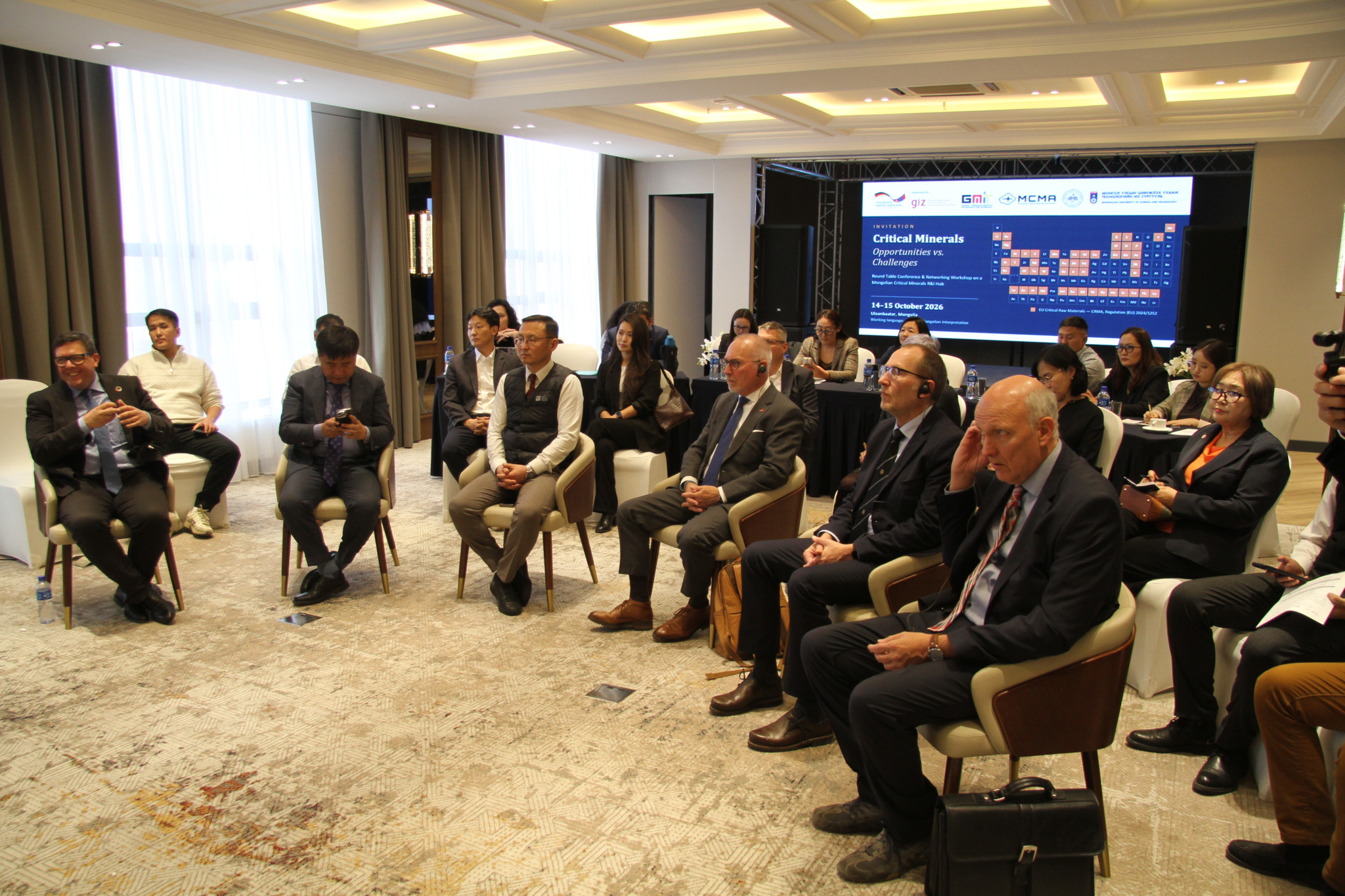
The international roundtable conference and cooperation workshop titled "Critical Minerals: Opportunities and Challenges" was held on 14-15 October 2026. The event was jointly organized by the German-Mongolian Institute for Resources and Technology (GMIT), the German Agency for International Cooperation (GIZ), the Mongolian Critical Minerals Association, the School of Law of the National University of Mongolia, and the School of Geology and Mining Engineering of the Mongolian University of Science and Technology.
The first day of the roundtable conference covered a range of topics, including Mongolia's foreign policy on critical minerals, strategic resource management, Europe's outlook, opportunities to supply rare earth elements to Germany, international best practices and diagnostic tools for the sector. A panel discussion also explored the development of strategic value chains based on critical mineral resources.
The second day’s workshop focused on jointly developing the concept for the Critical Minerals’ Research & Innovation Hub (R&I). Drawing on experience of university-industry collaboration in Mongolia, Germany and other countries, participants discussed ways to foster research and innovation partnerships and strengthen cross-sectoral cooperation.
Representatives of government agencies, embassies, businesses, civil society organizations, universities, research institutions The first day of the roundtable conference covered a range of topics, including Mongolia’s foreign policy on critical minerals, strategic resource management, Europe’s outlook, opportunities to supply rare earth elements to Germany, international best practices and diagnostic tools for the sector. A panel discussion also explored the development of strategic value chains based on critical mineral resources. and international partners took part in the two day event. They exchanged views on policy and strategy for Mongolia’s critical minerals sector, opportunities to connect with international markets, and research and development cooperation.
During the conference, we spoke with Professor B. Battsengel, rector of the German-Mongolian Institute for Resource and Technology (GMIT).
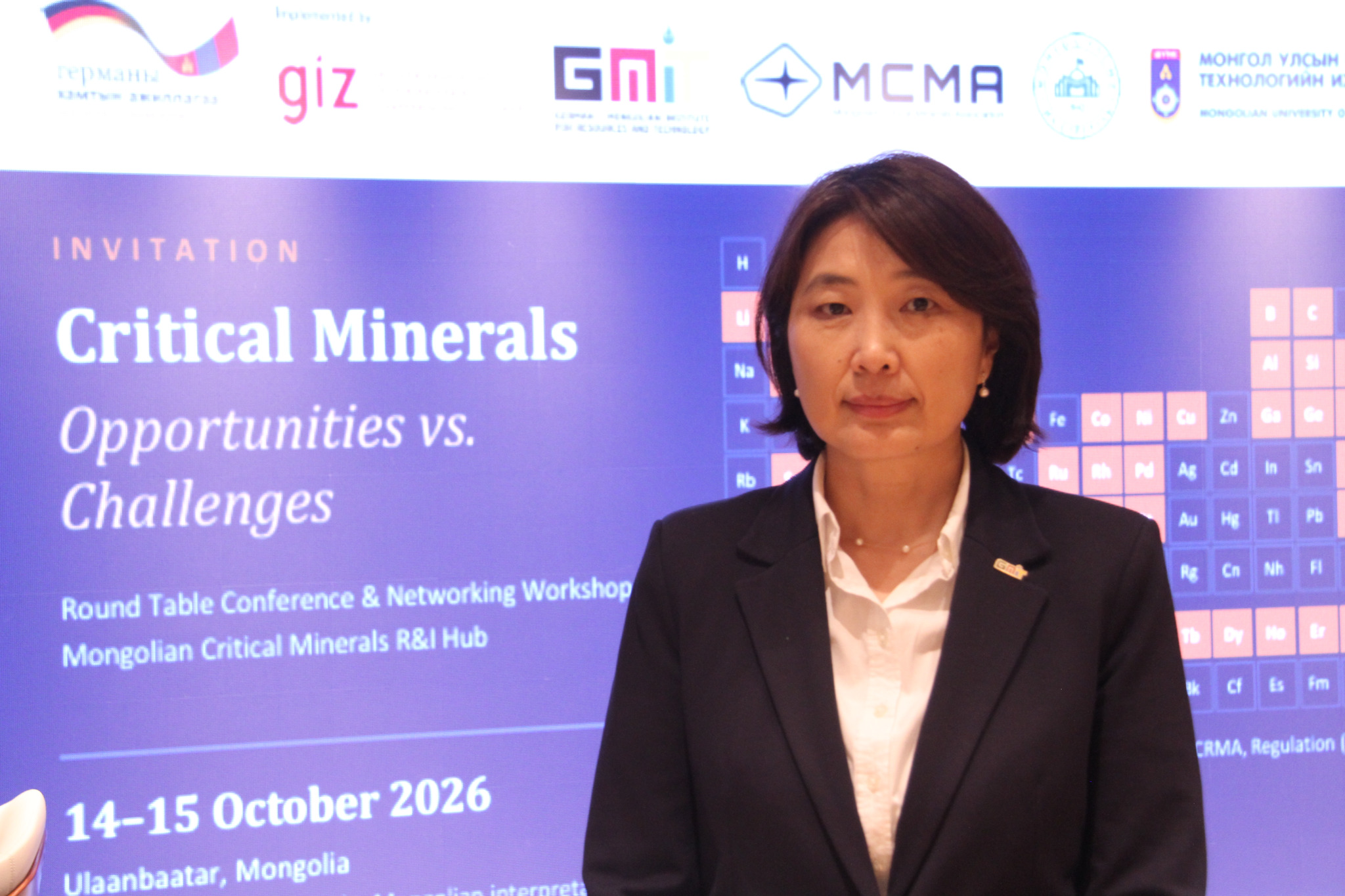
What is the significance of the Critical Minerals Roundtable Conference?
Critical minerals have attracted growing global attention because of their geopolitical and strategic importance. As a result, countries around the world are drawing up their own lists of critical minerals. Demand for these resources is also increasing as the world transitions to green energy.
Because the supply of these raw materials is heavily concentrated in a single country, China, countries are seeking alternative partners and developing new strategies to expand cooperation. Mongolia has also been addressing this issue for several years. In this context, relevant stakeholders, including the Mongolian Critical Minerals Association, the German-Mongolian Institute for Resources and Technology (GMIT), the National University of Mongolia and the Mongolian University of Science and Technology, have been jointly organizing seminars. These seminars have been held every May for the past four years.
This time, however, the aim was to take a more practical approach to policy and strategy. Discussions covered international best practices, particularly those of the European Union and Germany, the current global context, and the principles promoted by the United Nations.
The event provided an opportunity to hear diverse perspectives on what Mongolia should prioritize across the entire critical minerals value chain, from exploration and research through extraction and processing to marketing. The issues extend beyond technical and technological considerations to include local communities, regional development, and the environment.
What role does the education sector, particularly GMIT, play in Mongolian-German cooperation in the mining sector?
GMIT was established with the aim of training specialists to help develop value-added processing in the mineral resources sector. Germany has been regarded as a strategic partner in this sector. From the outset, the vision was to develop manufacturing in Mongolia, process raw materials into finished products and export them to Germany. However, this vision has yet to be realised because of delays in policy implementation.
One major achievement, tangible, however, has been the establishment of GMIT to train specialized engineers and other professionals for the mining sector. Ultimately, the development of any sector depends on its workforce. This makes investment in education and scientific research essential.
The roundtable conference focused primarily on jointly developing the concept for a Research and Innovation Hub for Critical Minerals. Could you tell us more about this initiative?
The Research and Innovation Hub is a new initiative, and its concept is still under development. Major projects should be grounded in research and innovation. Through this initiative, we aim to bring together a broad range of stakeholders. including the public and private sectors, educational and research institutions, and civil society organizations, and ensure that their voices are heard.
We still have to develop the Hub's structure and define its scope. In many countries, long-term strategies are developed, and decisions are informed by researchers' views, recommendations, and experience.
What requirements should this R&I Hub meet?
First and foremost, the Hub should ensure the participation of all relevant stakeholders, with researchers playing a leading role in its activities. Researchers' voices are often underrepresented in decision-making. To address this, they must be actively involved in shaping the Hub's work. This means bringing together not only experts in mining technologies and methodologies, but also researchers specializing in human rights, environmental issues, and community relations.
In addition, projects would be funded by both the public and private sectors, helping to bring in new technologies and drive innovation.
Ultimately, establishing an R&I Hub is a complex undertaking that must be underpinned by extensive research and analysis. This initiative is still at an early stage, with discussions ongoing.
Thank you for the interview.