Эрдсийг эрдэнэст
Ирээдүйг өндөр хөгжилд
Ирээдүйг өндөр хөгжилд
Mining The Resources
Minding the future
Minding the future
By T. Byambanaran
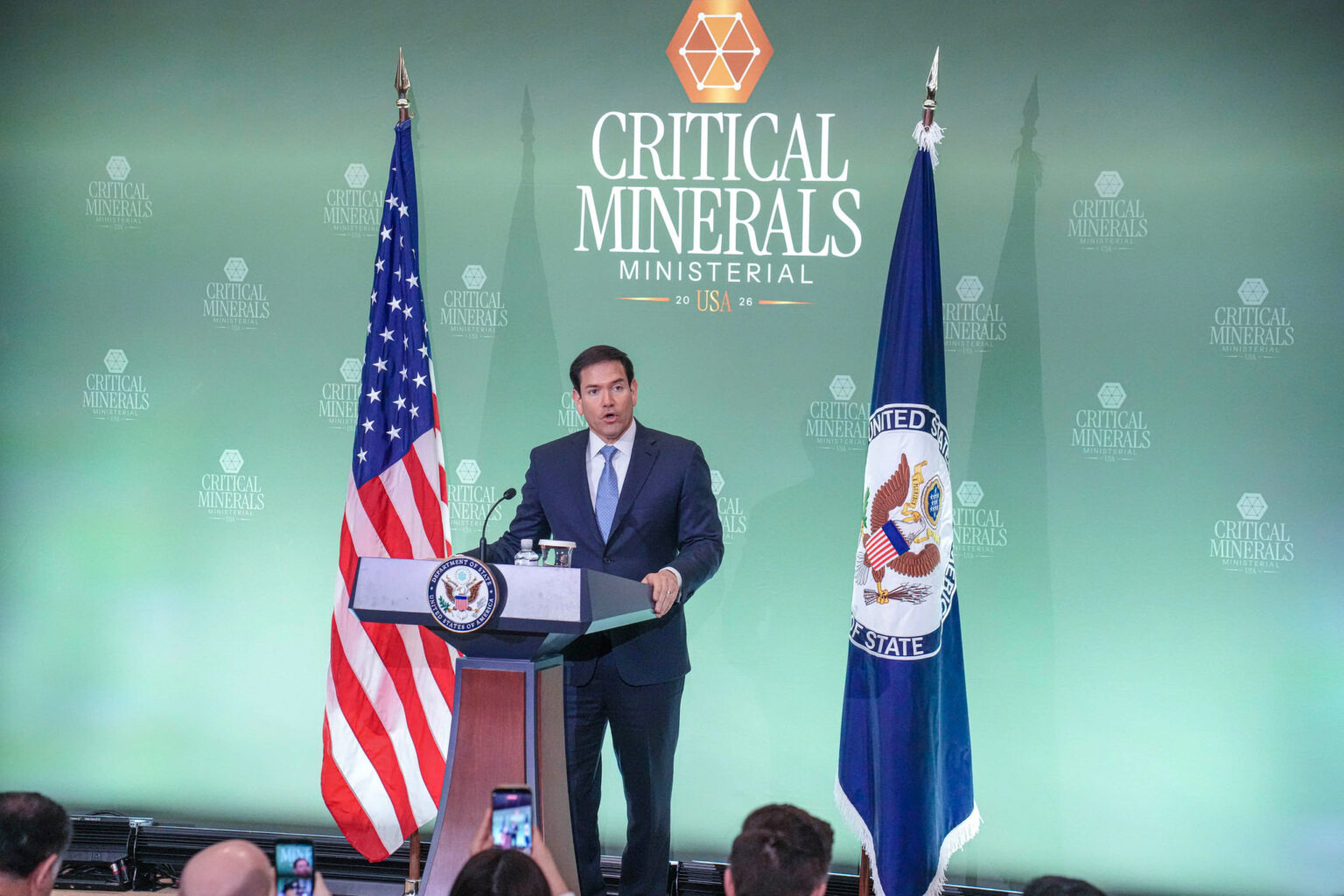
Representatives from 54 countries across Asia, Africa, North America, and the Pacific region, as well as delegates from the European Union, participated in the Inaugural Critical Minerals Ministerial organized by the U.S. Department of State on February 4. Mongolia's inclusion in the delegation demonstrates that it is contributing its views and joining as a genuine stakeholder in a new global dialogue on strategic raw materials.
Mongolia's participation among the attendees signals that the country is entering the global strategic raw materials dialogue as a substantive and active stakeholder rather than a peripheral observer.
The world is entering a quiet yet intensifying competition for scarce but indispensable resources that underpin global supply chains, as nations face a growing "hunger" for mineral reserves. Amid the accelerating pace of the Fourth Industrial Revolution - marked by the rapid expansion of artificial intelligence, advanced technologies, and the transition to renewable energy - the strategic importance of critical minerals and rare earth elements (REEs) is increasingly apparent.
Accordingly, countries are shaping their strategies based on their respective advantages and geo-economic positions, employing all available means. Countries with resources are extracting them, those with technology are processing them, while others with large markets are importing them and seeking to reduce risks by diversifying supply chains.
The inaugural Critical Minerals Ministerial was convened at the intersection of this emerging competition and cooperation, bringing together representatives from more than 50 countries.
Critical minerals have, for many countries, become the "oil and steel" of the new era. On November 6, the U.S. Department of the Interior, through the United States Geological Survey, updated its "2025 Critical Minerals List”. The list identifies minerals that are strategically important to the U.S. economy and national security, and that face potential supply disruption risks. The 2025 update added 10 minerals to the previous 2022 list, bringing the total to 60 critical minerals, including copper, graphite, lithium, nickel, silver, tungsten, and uranium.
THE U.S.'S NEW PLAY IN THE STRATEGIC RAW MATERIALS SECTOR
The primary goal of the U.S. initiative behind this meeting was to restructure global supply chains for critical minerals among partner countries and, ultimately, reduce the vulnerabilities associated with overreliance on China. However, according to BBC News, the United States and participating countries avoided explicitly naming the People's Republic of China in their official statements. Instead, they emphasized the excessive dominance of "foreign supply" and highlighted the challenges faced by resource-rich countries with limited access to financing in expanding their mining activities.
In reality, China undeniably dominates the critical minerals sector. According to the international law firm White & Case, the country controls the production of at least 15 types of critical minerals. For instance, China accounts for 98.7% of global gallium production, 95% of magnesium, 82.7% of tungsten, and 69.2% of rare earth elements.
Moreover, China maintains a leading position in the processing and refining of critical minerals. For example, it is estimated that roughly 90% of the world's rare earth elements are processed there.
This dependence on Chinese supply chains has become a strategic concern, prompting the United States and other countries to pursue policies aimed at boosting domestic production, expanding reserves and processing capacity, and "diversifying" their supply channels.
According to officials, the meeting was described as just the "beginning" of multilateral cooperation to align trade, investment, and industrial policies among partner countries and to coordinate the strategic raw materials market.
The law firm Clark Hill outlined several key objectives of the meeting. First, to diversify the supply chains of critical minerals. Second, to reduce overreliance on China. U.S. Secretary of State Marco Rubio and Vice President J.D. Vance noted that China's dominance in the processing and refining of critical minerals poses significant geopolitical, national security, and economic risks. Third, the meeting sought to establish a trade bloc for critical minerals among partner countries.
WHAT WERE THE OUTCOMES OF THE INAUGURAL CRITICAL MINERALS MINISTERIAL?
The meeting went beyond political statements. What stood out was the announcement of concrete decisions involving mechanisms, financing, and institutional structures.
According to an article from the Center for Strategic and International Studies (CSIS), the major outcomes of the ministers' meeting can be summarized as follows: First, the "Project Vault" initiative was launched to establish a strategic reserve valued at approximately $12 billion. Second, a new multilateral forum called "FORGE" was created. Third, discussions were held on setting a price floor for critical minerals and establishing preferential trade zones. Fourth, 13 bilateral agreements on critical mineral cooperation were signed.
A SHIELD AGAINST SUPPLY SHORTAGES: PROJECT VAULT
A recent example of the Trump administration's efforts to strengthen domestic critical mineral supply chains is the "Project Vault" initiative. On February 2, President Trump announced the creation of a strategic reserve designed to support American industry and reduce dependence on imported raw materials.
Valued at nearly $12 billion, this program represents the United States' first strategic stockpile of critical minerals, according to the research firm S&P Global. In effect, it establishes a "safety valve" to prevent disruptions in domestic production caused by supply shortages, geopolitical tensions, or sudden market fluctuations. This measure ensures that businesses and manufacturers are protected from losses and production stoppages due to resource scarcity.
FROM FOREIGN DEPENDENCE TO STRATEGIC PARTNERSHIP: PAX SILICA
Even before these developments, in December 2025, the United States launched the "Pax Silica" initiative. This flagship program of the U.S. Department of State focuses on artificial intelligence and supply chain security, aiming to reduce excessive reliance on foreign markets in strategic sectors such as critical minerals and to strengthen economic cooperation among trusted partners.
Jacob Helberg, United States Under Secretary for Economic Growth, Energy and the Environment, highlighted the shift succinctly, noting, "If the 20th century ran on oil and steel, the 21st century runs on computers and the minerals that feed them."
The initiative was signed by 10 countries, including Australia and the United Kingdom, while Canada, the European Union, the Netherlands, the Organisation for Economic Co-operation and Development (OECD), and Taiwan joined as participants. Through these measures, the United States is steadily working to secure the critical minerals and rare earth element (REE) reserves it requires.
THE FORUM ON RESOURCE GEOSTRATEGIC ENGAGEMENT: FORGE
Another major outcome of the ministerial meeting was the establishment of FORGE, the Forum on Resource Geostrategic Engagement. This mechanism expands upon the "Minerals Security Partnership" launched during President Joe Biden's administration, providing a new platform to bring together mineral-producing and consuming countries under one roof and ensure coordination of multilateral policies.
The forum will be chaired by South Korea until June 2026, with the main objectives to:
PRICE STABILITY AS A KEY TO INVESTMENT
Another major topic discussed at the meeting was the sharp price fluctuations of critical minerals. Vice President J.D. Vance emphasized that "Consistent investment is nearly impossible, and it will stay that way so long as prices are erratic and unpredictable."
In response, policy proposals were put forward, including setting benchmark prices at each stage of production, using tariffs to guard against excessively cheap foreign supplies, and requiring partner countries to adhere to price floors.
In other words, the goal is not to leave strategic raw materials entirely to market "free play," but to create a regulated environment that supports stable, long-term investment.
Thus, the inaugural Critical Minerals Ministerial culminated not merely in discussions but in concrete actions encompassing financing, policy coordination, new institutional structures, and market regulation, demonstrating that critical minerals have rightfully become a central issue in global geoeconomics.
THE TIME HAS COME FOR MONGOLIA TO DEFINE ITS CRITICAL MINERALS POLICY
Around the world, raw materials such as copper, lithium, nickel, rare earth elements, zinc, cobalt, and graphite are classified as "critical minerals, with some also referred to as "high-tech" or "strategic" minerals. At the same time, countries increasingly recognize the need to adopt and implement long-term strategies and policy frameworks, identify their own critical mineral resources, and ensure their stable and reliable supply.
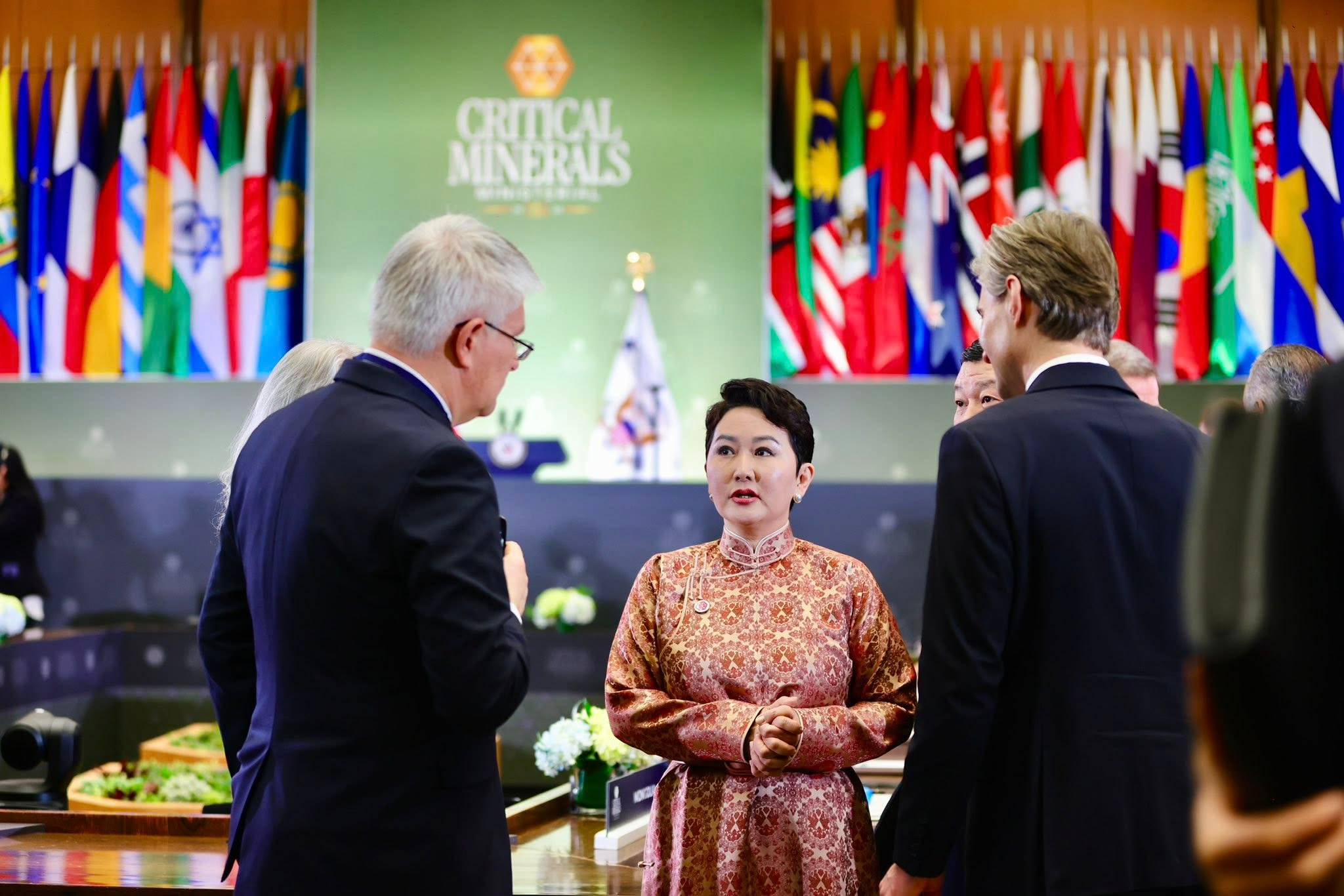
Within this context, the inaugural Critical Minerals Ministerial was convened, with B. Battsetseg, Minister of Foreign Affairs of Mongolia, representing the country. During the meeting, she held bilateral discussions with foreign ministers from more than 30 countries and explored cooperation opportunities with representatives from South Korea, Japan, India, several Latin American countries, as well as Latvia, Switzerland, Italy, and Mexico. This demonstrates that Mongolia's strategic interests are expanding beyond the regional level to the broader international stage.
The issues discussed were clear. The talks centered on how to engage the private sector at every stage of critical mineral exploration, extraction, and processing; how to expand international cooperation; and how to collectively address challenges related to financing, technology, sustainable development, and supply chain management.
Following the meeting, Minister B. Battsetseg emphasized, "It is advisable to develop a short-term work plan and, in defining our critical minerals policy, to study the best practices of other countries."
However, according to the "Prospective Study on Mongolia's Rare Earth Elements" published in 2025 by the Mineral Resources and Petroleum Authority of Mongolia, Mongolia's rare earth element projects remain largely stalled, with limited progress from exploration to extraction and processing an ongoing and significant challenge.
According to the National Geological Survey of Mongolia, there are 26 occurrences and 6 registered rare earth deposits across 16 soums in 9 aimags.
In total, these resources comprise approximately 2.4 million tons of rare earth element oxides contained within 499.3 million tons of ore. In addition, associated resources have been identified, including strontium oxide, phosphorite, hematite, zirconium oxide, niobium oxide, as well as rare earth elements, uranium, thorium oxide, and cerium oxide found in sand-type deposits.
The question now is whether Mongolia will remain merely a raw material exporting country or leverage these resources to supply value-added products to the global market and play a smart, strategic "game."
In any case, the inaugural Critical Minerals Ministerial laid the groundwork for Mongolia to become part of a multilateral mechanism and to engage in substantive dialogue with countries it might not otherwise have the opportunity to engage directly. This represents a significant step, both diplomatically and economically. Mongolia now faces the urgent task of defining its critical minerals policy, establishing clear criteria for attracting investment, and aligning environmental and social responsibility with its strategic objectives.
As global demand for critical minerals continues to rise and new opportunities knock on the door, it is more important than ever for Mongolia to anticipate developments and proactively plan its next moves.