Эрдсийг эрдэнэст
Ирээдүйг өндөр хөгжилд
Ирээдүйг өндөр хөгжилд
Mining The Resources
Minding the future
Minding the future

O.Dulguun
On paper, green mining appears to be thriving; on the ground, however, significant challenges remain. As international ESG (Environmental, Social, and Governance) standards take root in Mongolia's Gobi Desert, an urgent question arises: how are companies balancing the water levels of herders' wells, the natural flow of sacred rivers, and the demands of economic efficiency?
Behind the glossy success stories presented by industry leaders lie deeper complexities - entangled governance issues, distinct cultural contexts, and the delicate fabric of trust within local communities.
In the mining sector, ESG was initially introduced as part of companies' voluntary responsibility initiatives. Today, however, this has evolved into a prerequisite for accessing international markets.
But is this "common language" truly being implemented under Mongolia's real conditions?
At the international level, ESG has become a widely recognized standard framework through initiatives such as the Principles for Responsible Investment (PRI) and the Global Reporting Initiative (GRI).
While European and Chinese markets have incorporated ESG into their legal frameworks as a core requirement for sustainable development, in the United States, it has become a subject of political debate. By 2025, regulatory authorities had reached the point of reconsidering and, in some cases, stepping back from the enforcement of ESG requirements.
This divergence in political and geopolitical approaches presents a strategic risk for a mining-dependent country like Mongolia. We may portray ourselves as "green," but we are increasingly required to substantiate, through verifiable evidence, the global standards to which our reporting aligns, the measurement criteria used, and specify the tangible value ultimately delivered to local communities and landscapes.
WEAK OVERSIGHT MECHANISMS
The primary challenge facing Mongolia's mining sector is not the adoption of ESG itself, but the weakness of monitoring and enforcement mechanisms.
It is encouraging that major companies - such as Oyu Tolgoi and Erdenet Mining Corporation - have begun issuing reports in accordance with the standards of the Global Reporting Initiative. However, across the broader industry, there remains a significant risk that ESG reporting becomes more a matter of form than of substance.
In particular:
Social Impact Assessments (SIA): Mongolia currently lacks an independent legal framework that requires comprehensive social impact assessments. As a result, ensuring meaningful public participation and protecting local interests often falls to corporate discretion rather than being a binding obligation.
Transparency bottleneck: The weak capacity of governance institutions and limited access to information for citizens undermine the "Governance" and "Social components of ESG, leading to Mongolia's relatively low standing in international assessments.
At the heart of the mining sector's environmental impact lies one undeniable issue: water. Oyu Tolgoi's consumption of 0.4 cubic meters of water per ton of ore processed is a technological achievement that meets global standards. Yet in the Gobi region, this figure is far more than a measure of efficiency - it directly influences the very viability of local life.
The deep groundwater reserves in the Galba Gobi, tapped for mining production, have accumulated over thousands of years and are essentially non-renewable. This makes them a major source of concern and a focal point of distrust among local communities.
IN THE GOBI, MINING SECTOR WATER USE BECOMES A MATTER OF SURVIVAL
As part of the Drinking Water Relocation Project, the "Shine Bor Ovoo" spring was created to improve water access for wildlife - a solution that is technically sound from an engineering perspective. Yet altering natural river flows and underground water courses carries unpredictable long-term consequences for ecosystem balance.
The company reports that flow rates remain stable through continuous monitoring. Still, local herders living far from the mining site observe declining water levels in their wells and drying springs, which they often attribute to mining operations. This underscores the importance of ESG governance, particularly transparency and meaningful collaboration among stakeholders.
Within the framework of social responsibility, the development of Khanbogd soum center - with modern infrastructure capable of supporting 40,000 residents - represents a significant step forward in regional development.
However, for herder households living within the mining impact zone, the situation looks quite different. Projects such as repairing wells or installing solar pumps offer short-term solutions, but they cannot fully address deeper structural issues - like shrinking pastures and increasing dust - that result from the expansion of mining activities.
The "Social License to Operate" between local communities and mining companies should extend beyond legal documents. Its strength depends on whether the impacts on herders' living environment and the future of traditional livestock herding are realistically assessed and discussed with them on an equal footing.
In other words, while the creation of more than 100 new wells is commendable, local residents continue to demand clear, scientifically validated answers about how long the groundwater sustaining these wells will endure under ongoing mining extraction.
CARRYING OUT REHABILITATION IN THE RELEVANT AIMAG AND SOUM IS CRUCIAL
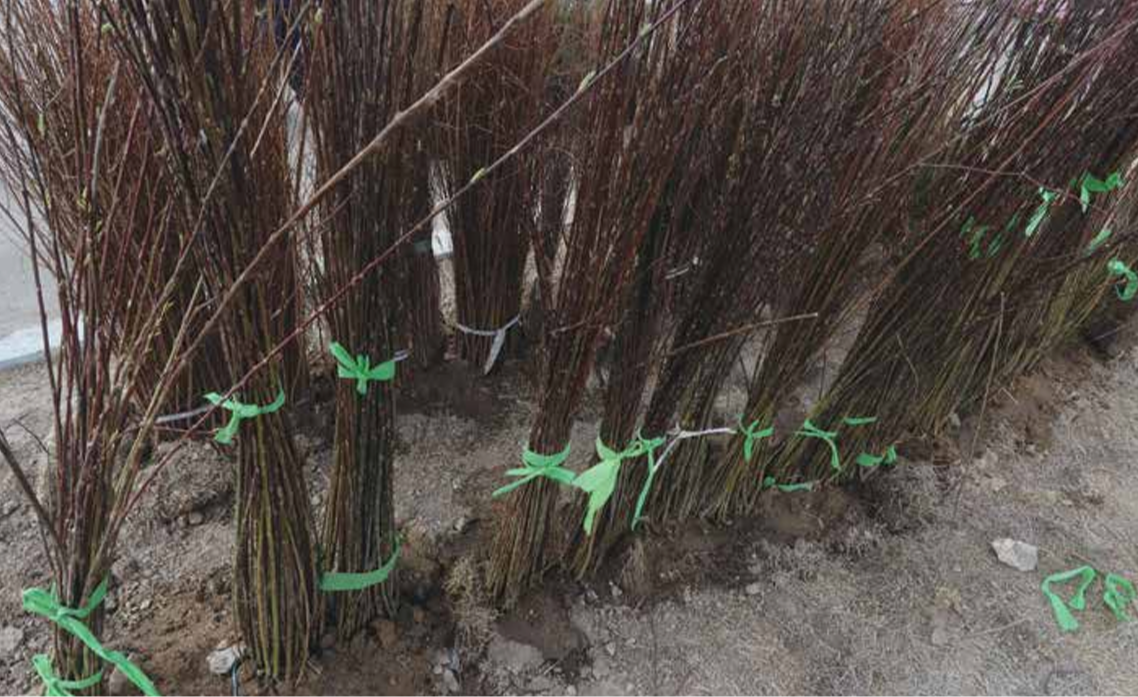
The rehabilitation of 1,215 hectares in the Khuder and Yeruu soums of Selenge aimag represents a major achievement in the history of Mongolia's mining sector. Oyu Tolgoi restored land degraded by irresponsible mining at its own expense, planting 36.4 million trees - a classic example of environmental "compensatory protection."
However, it is important to recognize that this approach also reflects the logic of "offsetting impacts in the Gobi by restoration in Khangai," rather than addressing the environmental consequences directly where they occur.
Biological rehabilitation should aim to restore the local ecosystem to its natural state. While planting trees in Selenge may make restoration efforts appear "green" on paper, the underlying degradation, dust, and vegetation loss in the Gobi tell a different story. For this reason, the "Rehabilitated Area" indicator in ESG reports needs to be broken down by geographic location and linked directly to its effect on the quality of life of local residents.
ERDENET MINING CORPORATION'S ESG
Defining the sector's green development solely by environmental protection is misleading. In the "Social" and "Governance" aspects of ESG, Erdenet Mining Corporation exerts a significant influence at the national level.
As of 2023, the plant has created over 22,000 jobs, meaning that for every 100 workers in Mongolia, two earn income directly tied to Erdenet Mining Corporation. Each employee, in turn, indirectly supports the creation of two additional jobs in the wider economy, highlighting the substantial economic multiplier effect of the sector.
Between 2010 and 2023, Erdenet Mining Corporation invested 45 billion MNT in environmental initiatives, carrying out technical and biological rehabilitation across 1,309 hectares, roughly equivalent to 1,680 football fields. The company's affiliated facilities, such as the Forest Genetic Resources Center and the Soil Innovation and Biotechnology Center, show that rehabilitation is no longer limited to tree planting but is now being advanced through scientific methods. Notably, planting and nurturing 53,000 trees on the open-pit mine tailings served as a practical experiment in "reviving degraded land."
One of the most successful components of ESG strategy in mining is investment in human resources and education. Over the past 13 years, Erdenet Mining Corporation has invested 120 billion MNT in the education sector. Among these initiatives, the "Replacing Pit Latrines" project has reached one in every three kindergartens in Mongolia, generating social impact that extends well beyond the local region to a national scale.
However, this economic impact has not fully reached the local economy. In aimags such as Orkhon and Bulgan, small and household businesses dominate, and a diversified economy capable of sustaining the purchasing power of industrial workers has yet to emerge. This presents a major challenge for mining-dependent towns in meeting ESG criteria related to "Sustainable Cities and Community Engagement."
WATER GOVERNANCE REMAINS A SENSITIVE POINT IN ESG
While mining companies view water as an industrial input and technological resource, for herders it embodies their livelihood, culture, and historical legacy. In her research on environmental governance in Mongolia, scholar Sara L. Jackson highlights that weak environmental governance is most evident in ESG's "G" criteria.
For instance, the implementation of the "Long-Name Law (Law on Prohibition of Mineral Exploration and Mineral Extraction at Headwaters of Rivers, Protected Zones of Water Reservoirs, and Forest Fund Areas) and the Water Law varies across strategic deposits. This uneven enforcement effectively grants mining companies preferential access, leading to unequal resource allocation. Moreover, the tendency for local residents' perspectives to be constrained by central government decisions risks reducing public participation to a mere formality. Relying solely on technical metrics to interpret herders' long-term observation experience undermines trust between local knowledge and professional assessments. and
Many Gobi residents share a common concern: as Mongolia enters the global market under the name "Minegolia," they worry that development may come at the cost of traditional herding and the resilience of the country's natural resources, as research indicates.
Even though the mining sector boosts GDP and contributes to the national budget, any negative impact on regional water resources is inconsistent with ESG's principles of sustainable development. Over the past century, the state sought to make the Gobi a habitable environment through water infrastructure; today, diverting groundwater toward industrial use marks a significant shift in governance policy.
In Mongolia's mining sector, the country's economic lifeline, the question remains whether the label "green" reflects a genuine commitment to a responsible future or serves merely as a public relations tool. Examples from Oyu Tolgoi and Erdenet Mining Corporation show that major players have successfully integrated ESG standards into their operations, investing tens of billions of MNT in environmental rehabilitation and social initiatives - an undeniable achievement. Yet it remains unclear whether such positive practices are being replicated across the sector as a whole.
The main tension lies between the company's "transparent" reports and the local residents' actual perceptions. While Oyu Tolgoi has implemented efficient water-use technologies, and Erdenet Mining Corporation maintains labor productivity above the national average, herders remain concerned about groundwater scarcity and shrinking pasturelands. This highlights gaps in Mongolia's ESG framework, particularly in Governance (G) and Social (S) - where legal and institutional mechanisms are insufficient to ensure transparency and meaningful local participation.
The absence of a law requiring Social Impact Assessments allows companies to prioritize self-serving, image-focused metrics in their reporting, potentially leaving real risks unaddressed and outside the scope of public scrutiny.
Going forward, for Mongolia's mining sector to become genuinely green, rehabilitation should prioritize the affected sites and local communities rather than relying solely on "compensatory protection." Planting trees in Khangai to offset damage in the Gobi may support overall environmental balance, but it cannot fully restore the ecosystem lost in the impacted region.
Therefore, ESG reports should go beyond general statistics and be treated as "living" documents, providing detailed insights into how mining activities impact local biodiversity and water resources.
Ultimately, a "green mine" is not limited to technical rehabilitation. It embodies a comprehensive responsibility: to extract mineral resources without degrading the living environment of local communities, to implement sustainable resource management that preserves natural assets for future generations, and to establish governance systems that ensure the equitable distribution of economic benefits. How Mongolia's mining sector rises to this challenge will directly shape the future of its "green" development.