Эрдсийг эрдэнэст
Ирээдүйг өндөр хөгжилд
Ирээдүйг өндөр хөгжилд
Mining The Resources
Minding the future
Minding the future
The Mongolian Mining Journal - December 2025
By А. Khaliun
The term of B. Lkhagvasuren, Governor of the Bank of Mongolia, ended in November 2025. Following this, the Speaker of Parliament, N. Uchral, nominated Sanjaa Narantsogt, former CEO of Erdenes Mongol LLC, as the next Governor.
Narantsogt began his career as a research assistant at the Institute of Mathematics of the Mongolian Academy of Sciences. In 2020, upon the establishment of the Ministry of Economy and Development, he was appointed Deputy Minister. During his tenure, he initiated and implemented a range of policy measures aimed at ensuring economic stability, maintaining balance in foreign trade, and advancing structural reforms.
For example, he developed the functions, organizational structure, and human resources responsible for the Ministry of Economy and Development’s macroeconomic policy and development planning, ensuring they met international standards.
During his tenure, he also prepared and secured approval for Government Resolution Draft No. 362, which aimed to protect and increase the country’s foreign exchange (FX) reserves based on macroeconomic calculations.
He identified that future-income–backed off take agreements were placing pressure on the budget and the balance of payments. By halting the conclusion of such agreements without government approval, he helped limit hidden debt and ensure budgetary transparency.
He also implemented measures to prevent a repeat of the government’s pre-election “lavish promises,” in which authorities had received cash from China using coal from the Tavan Tolgoi mine as collateral and distributed it directly to citizens.
To expand the tax base, he initiated the full digitalization of the value chain for mineral extraction, processing, and transportation, ensured registration in the unified E-tax system, and made contract registration fully transparent. These measures helped reduce the shadow economy and lay the foundation for a genuine increase in tax and customs revenues, demonstrating that, over his two years in the Ministry, he successfully managed major macroeconomic tasks, earned recognition in the sector, and was promoted to a higher position.
Having steadily advanced through the ranks on the basis of merit in the civil service, he was appointed CEO of Erdenes Mongol LLC in 2022. By leading state-owned mining companies, he became increasingly recognized in both political and public spheres.
Erdenes Mongol serves as the holding company responsible for implementing the government’s policy of bringing mineral-rich deposits into economic circulation and ensuring that the benefits of mining reach all citizens. The holding oversees 31 entities engaged in the exploration, extraction, and processing of various minerals, including gold, silver, copper, coal, and ore.
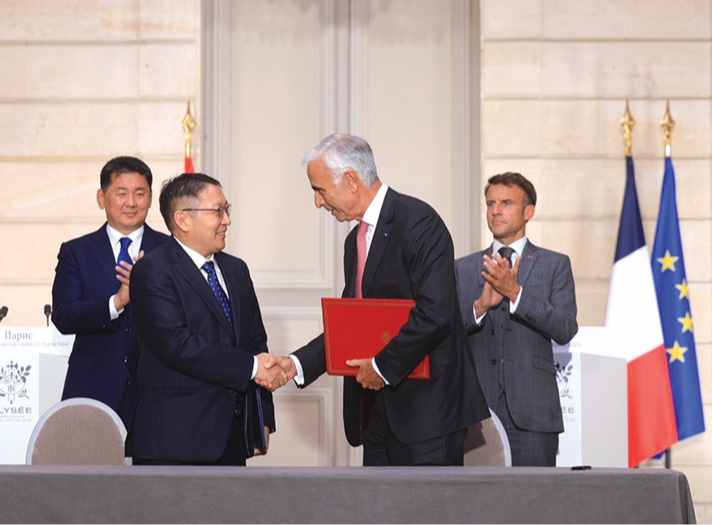
Within the scope of these responsibilities, he served as Secretary of the Government of Mongolia’s Working Group for an investment agreement with France’s state-owned Orano Mining Group on uranium extraction. In this role, he collaborated with the French side on the draft agreement and oversaw the behind-the-scenes work of safeguarding Mongolia’s interests and ensuring the fulfillment of its priority requests. Through these duties, he matured as a public servant, openly receiving both praise and criticism, and gained political support.
Following 18 rounds of negotiations with the French side, conducted by the Government of Mongolia in accordance with national legislation and international legal principles, the second major investment agreement with a third-country partner was successfully ratified. The working group led by S. Narantsogt worked persistently on all aspects of the agreement, including developing Mongolia’s financial calculations in accordance with international standards and verifying them against the investor’s calculations, ensuring that Mongolia would receive at least 51% of the direct benefits generated annually from the extraction of strategically important mineral deposits.
Having gained hands-on experience at the core of Mongolia’s budgetary and monetary policymaking, macroeconomic planning, improving the utilization and benefits of strategically important mineral deposits, and drafting investment agreements, he was nominated as Governor of the Bank of Mongolia—a nomination that Parliament accepted without suspicion or controversy.
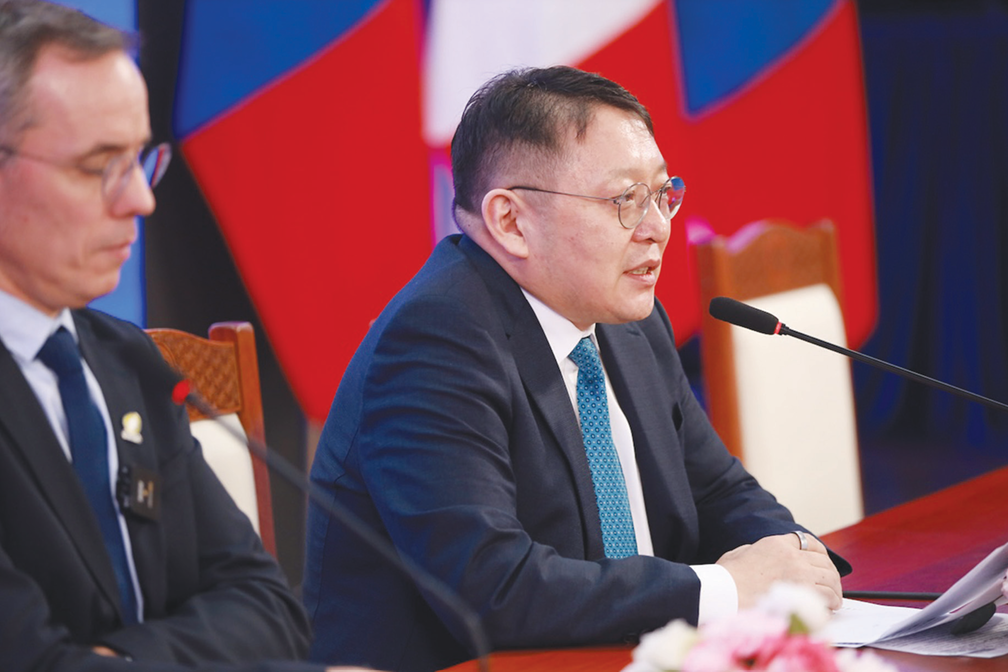
From his perspective as an economist, being appointed Governor of the country’s central bank represents the highest point of his professional career. The parliamentary hearing to nominate Narantsogt for the position of Governor of the Bank of Mongolia—responsible for setting monetary policy, increasing foreign exchange reserves, and strengthening the state treasury—was held on December 16.
Highlighting some of his responses to questions raised during the hearing regarding the policies he would pursue if appointed to lead the central bank:
He stated that his goal is to transform the Bank of Mongolia from an “economic firefighter” into a supporter of sustainable development. He pledged not to turn the central bank into the government’s cash desk, but rather to develop it into a professional and strategic partner that helps correct fiscal policy mistakes and serves as an effective lever for economic growth.
The relationship between the central bank and the government is regulated by law, and both in theory and practice, the central bank should interact with the government as an independent institution. He noted that in recent years, the central bank’s provision of direct and quasi-fiscal financing had significantly undermined its credibility. Therefore, with the support of Parliament, he pledged to take the lead in safeguarding the central bank’s independence and strengthening oversight of the state budget.
He noted that 60% of commercial banks’ lending consists of consumer loans, which largely finance imports. He stated that the Bank of Mongolia would pay closer attention to the structure of credit, review consumer lending— particularly loans that drive imports—and implement policies to expand lending for production and business activities.
To reduce lending interest rates, he stated that the central bank would conduct a detailed, “surgical level” analysis of funding costs within its legal mandate and focus on measures to lower interest rates.
He supports the entry of foreign banks. Mongolia’s legal framework for foreign banks is open, and their presence would bring multiple benefits, including increased funding sources and competition, the introduction of new technologies, and improved management practices.
At the plenary session on December 18, Parliament members considered the appointment of S. Narantsogt as Governor of the Bank of Mongolia. In a secret ballot, a majority of the members present approved his nomination. He has officially assumed office and begun performing his duties.