Эрдсийг эрдэнэст
Ирээдүйг өндөр хөгжилд
Ирээдүйг өндөр хөгжилд
Mining The Resources
Minding the future
Minding the future
By О. Dulguun
Efforts to reduce Oyu Tolgoi’s financing costs have largely been brought under control, leaving only the agreement with Entrée Resources outstanding. But the only news emerging about them has concerned the transfer of its mining licences.
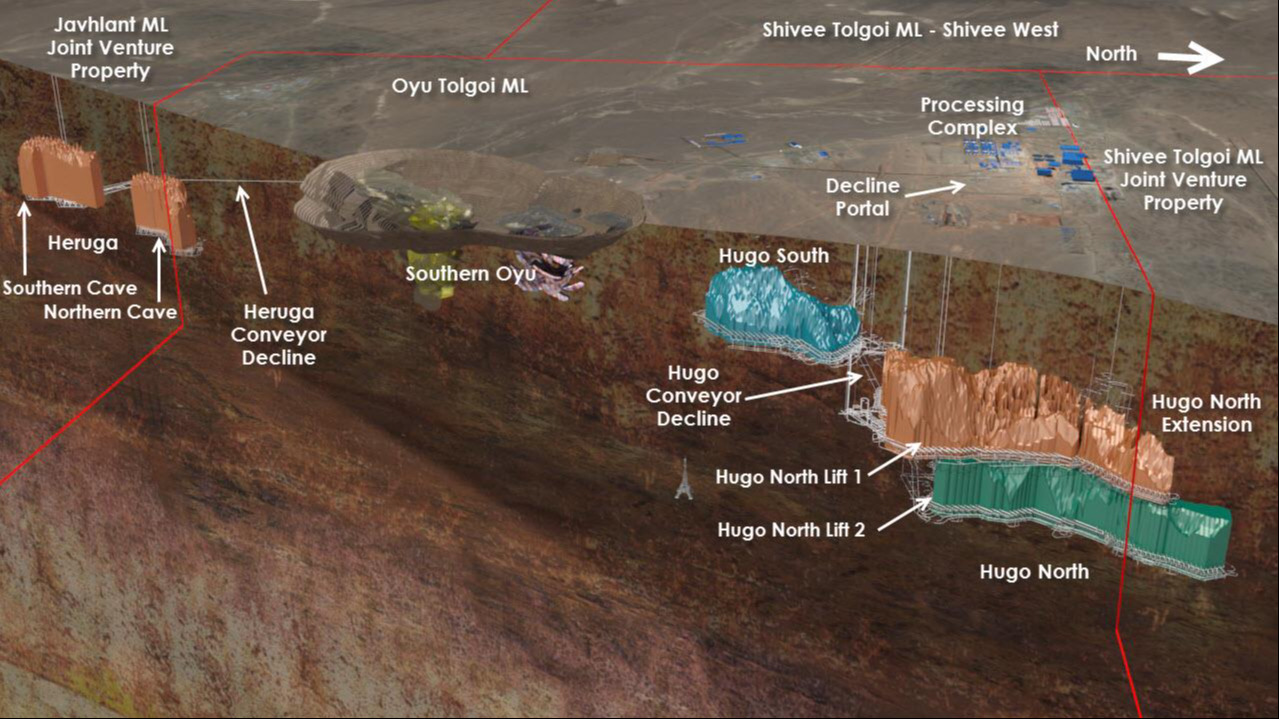
More than a year has passed since the Government officially announced that it would negotiate a new Investment Agreement (IA) with Entrée LLC, the holder of the Shivee Tolgoi and Javkhlant mining licenses, which cover the highest-grade areas of the Oyu Tolgoi group of deposits. Yet, as the negotiations near their first anniversary, no meaningful progress has been made. Talks on safeguarding Mongolia’s interests and redefining the State’s ownership stake have reached an impasse, while Entrée appears to be quietly advancing its own agenda, one move at a time, ahead of the Government.
Entrée appears to be seeking to smooth the way for the transfer of its mining licenses by obtaining a tax clearance certificate related to the transfer before sitting down at the negotiating table. Although the tax dispute over the license transfer has only made headlines in recent days, it has been ongoing for more than a year. This is a complex issue with enormous legal and geo-economic risks.
The Minerals Law clearly stipulates that any change to or transfer of the State’s ownership stake in a deposit of strategic importance must be submitted to Parliament for decision, in accordance with its constitutional powers. In other words, sector-specific legislation cannot, under any circumstances, override Parliament’s authority or provide a legal basis for transferring Entrée’s two mining licenses. Even if the tax formalities related to the license transfer have been completed, the matter must still be submitted to Parliament for a final decision, as required by law.
The Dispute Over the “Tax Clearance Certificate”
To trace how events unfolded, look at the timeline. In the third quarter of 2025, when Entrée was attracting virtually no public attention, the company first filed a claim with Mongolia’s Administrative Court, seeking confirmation of the tax calculations relating to its mining licenses.
In the second quarter of 2026, Entrée paid the tax on the transfer of rights under the Corporate Income Tax (CIT) Law and resubmitted the relevant documents to the General Department of Taxation (GDT) for review on June 18.
However, on June 26, the tax authorities declined to issue a tax clearance certificate and returned the application, citing the company’s failure to submit all the required documents. Despite repeated explanations from the Government and the tax authorities that the application had been returned in accordance with the law because the procedural requirements had not been met, Entrée disregarded these explanations and went so far as to file a formal complaint against the authorities’ decision.
Curiously, in a report released on July 29, the Rio Tinto Group stated that “the Mongolian Government had agreed to initiate the transfer of the Panel 1 license in the first half of 2026.”
The Complexities of a “Strategic” Deposit
The disputes and complications surrounding Oyu Tolgoi can all be traced back to the Investment Agreement and the Shareholders’ Agreement signed on October 6, 2009. The Shareholders’ Agreement, in particular, was stamped “Confidential,” keeping it hidden from the public and placing it beyond the reach of public scrutiny. Although amendments were made in 2011 and parts of the agreement gradually came to light, key strategic documents related to Oyu Tolgoi have remained classified for nearly two decades. This prolonged secrecy has laid the groundwork for today’s misunderstandings and governance risks.
One example is the agreement finalized on February 3, 2025. Rio Tinto and Entrée Resources entered into an 80/20 joint venture agreement without specifically notifying the Mongolian Government and effectively bypassing the need for decision at the parliamentary level. Although the agreement’s origins date back to 2008, it was quietly finalized in 2025.
Under Government Resolution No. 170, dated April 9, 2025, the Javkhlant and Shivee Tolgoi deposits were designated as deposits of strategic importance. To establish, in accordance with the law, how the wealth of these strategic deposits was being allocated and who would exercise control over it, and to safeguard the State’s ownership stake and interests, Parliament established a temporary oversight committee in July 2025 to investigate issues related to Oyu Tolgoi and launched an inquiry.
The committee’s investigation continued with three days of public hearings in early December 2025, drawing considerable public attention. Stephen Scott, then CEO of Entrée Resources, attended the hearings in person and answered contentious questions concerning the joint venture’s mining licenses and the disputed 80/20 ownership structure.
Alongside the parliamentary committee, a Government working group established under an August 2025 directive by the Prime Minister also stepped up its efforts, with a view to initiating negotiations to reassess the State’s ownership stake in the joint venture’s license areas.
On December 19, 2025, the temporary committee submitted its findings and draft resolution to Parliament. The resolution was formally adopted on December 26. Under the resolution, the Government was instructed to conclude an Investment Agreement with Entrée, formally setting the negotiation process in motion.
Entrée’s Cunning Proposal
On March 25, 2026, Entrée LLC submitted a formal proposal to the Government working group. The proposal called for “the Mongolian State to relinquish its 34% equity stake in the project and instead receive an agreed royalty based on the total value of concentrate sales, in accordance with the Minerals Law.”
Given Oyu Tolgoi’s inability to control its rising capital costs and the Mongolian side’s failure to receive dividends, replacing its equity stake with a progressive royalty could, in fact, have been a financially advantageous option for Mongolia. However, following the formal adoption of amendments to the Minerals Law on October 16, this option has become economically unfavorable to Mongolia.
Oyu Tolgoi LLC prepares consolidated financial statements and benefits from special tax concessions, which have kept its tax payments to Mongolia relatively low to date. Under these circumstances, transferring the licenses would allow Entrée to benefit from the same tax concessions, legal protections, and financial advantages enjoyed by Oyu Tolgoi, potentially enabling it to avoid some of its tax obligations. It is therefore essential to conclude a separate Investment Agreement to safeguard the interests of the State and the nation and ensure their protection under the law.
License Transfer Described as “Urgently Needed”
In presenting its second-quarter 2026 results, Entrée Resources emphasized that “transferring the Shivee Tolgoi and Javkhlant mining licenses from Entrée to Oyu Tolgoi is a key near-term priority to ensure that development and lateral development work for Lift 1, Panel 1 of the Oyu Tolgoi underground mine can proceed without interruption.” The company also noted that it was actively working to restructure its Joint Venture Agreement (JVA) with Oyu Tolgoi into a more efficient arrangement while preserving its economic interests.
A month after the report was released, the company’s newly appointed President and CEO, Chris Adams, and Chief Financial Officer, Duane Lo, visited Mongolia on an official trip in early September 2026.
In a letter sent to shareholders as a “gift,” Chris Adams mentioned his meetings with the Minister of Industry and Mineral Resources and leaders of Mongolia’s domestic business community, expressing his positive impression of the scale of Oyu Tolgoi’s operations.
Although Entrée has publicly praised the project’s scale and the good cooperation between the parties, behind the scenes it appears to be pursuing a different course: seeking to obtain the tax clearance certificate through court proceedings and formal complaints, while pressing the Mineral Resources and Petroleum Authority of Mongolia (MRPAM) to proceed directly with the license transfers. Entrée’s moves appear to be a clear sign of developments running counter to the negotiations.
The news sparked widespread public concern, prompting the Minister of Industry and Mineral Resources and the Minister of Finance to issue categorical denials, insisting that “no license transfers have taken place.” Yet these developments suggest that Entrée’s negotiations may have reached an impasse. While ministers and officials confidently proclaim that negotiations will proceed, Entrée is already pursuing the tax clearance certificate through court proceedings and formal complaints, while continuing to prepare for the transfer of its mining licenses.
Updated Technical Report with a Revised Economic Assessment Expected in Early 2027
Entrée, which is listed on the Toronto Stock Exchange, had its previous technical report, published in 2021, prepared by independent professionals in accordance with NI 43-101 standards. Under Canadian securities regulations, a technical report may need to be updated when there are material changes to a deposit’s mineral reserves, drilling data, or commodity prices. Accordingly, an updated technical report incorporating the significant drilling results from 2026 and current high commodity prices is expected in the first quarter of 2027.
The 2021 Technical Report based its economic assessment on a copper price of $3.25 per pound and a gold price of $1,591 per ounce. An updated NI 43-101 Technical Report is expected in the first quarter of 2027, incorporating current elevated commodity prices and actual changes in costs. The revised assessment is expected to show a substantial increase in the projected economic returns and profitability of the Shivee Tolgoi and Javkhlant deposits compared with the original estimates. For the Government working group tasked with safeguarding Mongolia’s interests at the negotiating table, the report, expected in early 2027, will undoubtedly provide highly valuable information.
Entrée Seeks Cash
Entrée Resources’ latest financing decision signals a major move to bolster its finances. On October 20, the Toronto Stock Exchange-listed company officially announced plans to raise CAD 31.9 million through a private placement of up to 11 million shares at CAD 2.90 per share; just 14 days later, on November 14, it reported oversubscribed success, having raised CAD 36.2 million
Notably, a subsidiary of Tether, the cryptocurrency giant, is serving as the lead investor in this financing, which has attracted attention across the international mining industry.
Entrée has stated that the C$36.2 million financing will fund efforts to accelerate the transfer of the Shivee Tolgoi and Javkhlant mining licences to Oyu Tolgoi, secure a favourable outcome for itself in negotiations with the Government working group over State ownership, and prepare the updated Technical Report due in 2027.
According to CEO Chris Adams, bolstering the company’s cash reserves will give it the financial capacity to expand its corporate strategy, leveraging its world-class deposit in Mongolia and pursue royalties and other returns from high-grade copper and critical metals projects.
The Investment Agreement negotiations, publicly announced by the Government with great fanfare, have yet to deliver any tangible results and appear to have stalled. Yet Entrée’s actions suggest that the company is slowly but “steadily” advancing toward its ultimate legal objective: securing the transfer of its mining licenses.
Until recently, Entrée was a company that had remained largely under the radar, not only of the general public but also of industry experts and politicians. From the signing of the Oyu Tolgoi Investment Agreement in 2009 through 2025, it attracted little attention. Yet it is becoming increasingly clear that Entrée holds licenses covering vast strategic mineral resources and has been pursuing a carefully calculated strategy of its own all along.
Having become overly complacent after celebrating its progress in the first phase of the Oyu Tolgoi negotiations, the Government risks neglecting the remaining crucial negotiations instead of expediting them, potentially allowing Entrée to checkmate it with relative ease. The Government working group must therefore act decisively to protect Mongolia’s interests in accordance with the law and conclude an Investment Agreement with Entrée “without delay.”