Эрдсийг эрдэнэст
Ирээдүйг өндөр хөгжилд
Ирээдүйг өндөр хөгжилд
Mining The Resources
Minding the future
Minding the future
By B. Tugsbilegt
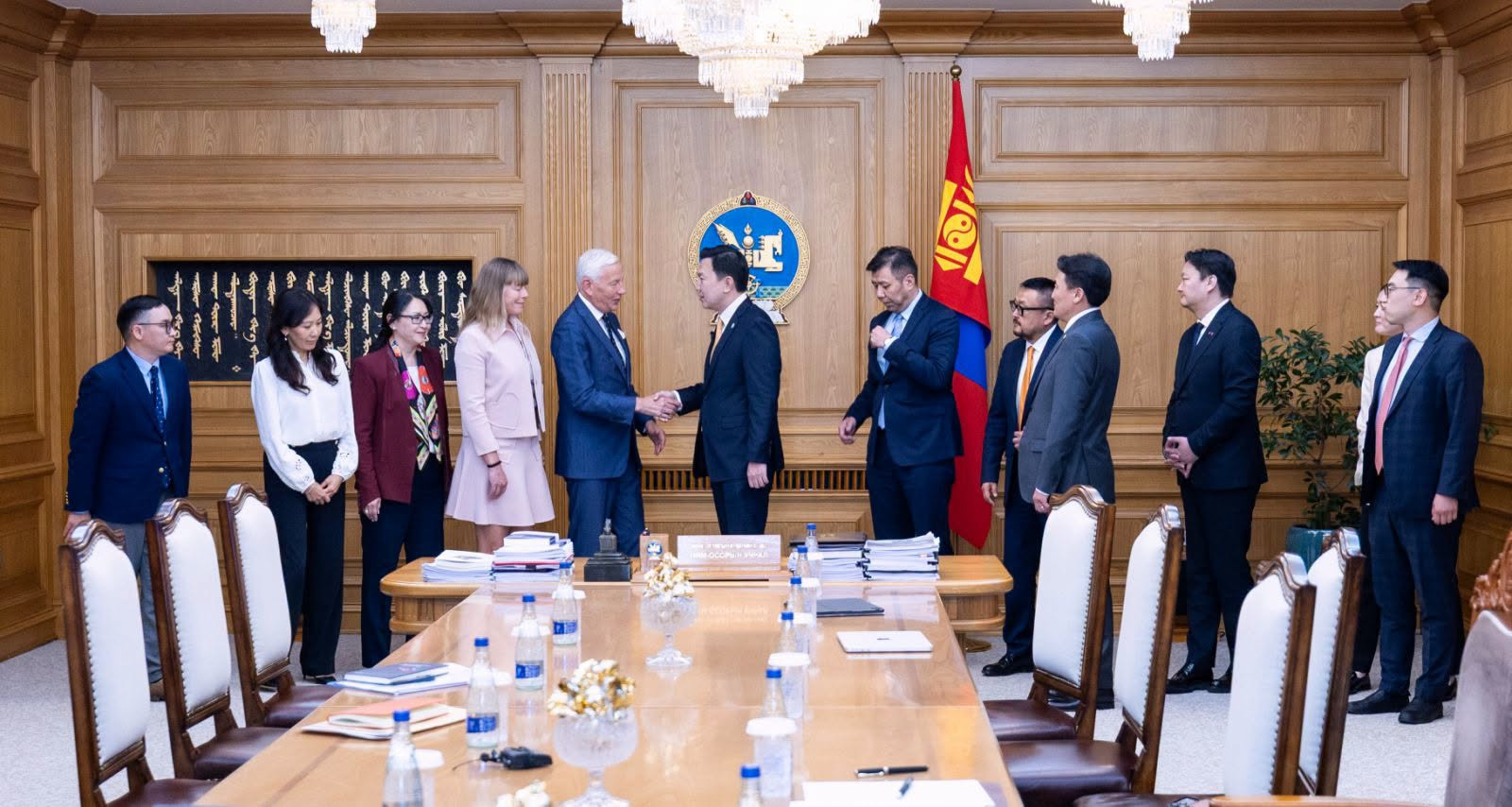
The Government of Mongolia announced the initial outcome of its negotiations with Rio Tinto on reducing the interest rate applied to the Oyu Tolgoi project loans just before the Naadam holiday.
In previous years, Rio Tinto had developed something of a tradition of delivering unwelcome "surprises" around the time of Naadam - typically announcing cost overruns or geological challenges affecting the Oyu Tolgoi project. This year, however, the tradition has been reversed. Instead, the news has been positive for Mongolia, a development that deserves to be warmly welcomed.
The government announced this positive development to the public on June 30 in a brief statement, outlining the outcome of the Oyu Tolgoi negotiations to reduce the project's loan interest rate. Specifically, it announced that the interest rate on shareholder loans financing the Oyu Tolgoi project would be reduced from 10.5% (6.5% + SOFR) to 7.9% (4% + SOFR).
Finance Minister Z. Mendsaikhan emphasized that the negotiations had been conducted under extremely difficult conditions. As a result, the interest rate on Oyu Tolgoi's shareholder loans will be reduced by 2.5 percentage points. However, expectations of a reduction of 3 percentage points or more - one that would have significantly eased Oyu Tolgoi's debt burden - were not realized. Still, many view the outcome as a respectable achievement, arguing that it is better to secure a modest gain than no gain at all.
Finance Minister Z. Mendsaikhan explained the expected benefits of the lower interest rate as follows: "The Government of Mongolia has concluded negotiations with Rio Tinto Group on the Oyu Tolgoi project under the Investment Agreement, which provides for a review of the loan interest rate every seven years. The working group established under Government Resolution No. 67 conducted continuous negotiations with Rio Tinto from October 30, 2025.
Looking at Oyu Tolgoi's debt structure, the project finance facility, provided by a consortium of 15 banks and financial institutions, accounts for 19.2% of the company's total outstanding debt ($3.9 billion at an annual interest rate of 9%). Preferred sponsor loans account for 8.2% and also carry a 9% interest rate. The prepayment facility carries an interest rate of 8.7%.
The government's key achievement in the negotiations was securing a reduction in the interest rate on the $6.1 billion shareholder loan provided by Rio Tinto-from the current 10.4% to 7.9%."
Including accrued interest, the outstanding balance of the shareholder loans has now reached $13 billion, accounting for more than 60% of Oyu Tolgoi's total outstanding debt. During the public hearing held in December 2025, it was disclosed that the loans are scheduled to be fully repaid by 2037. By then, the company is projected to have paid $19 billion in interest alone, bringing the total repayment - including the $6.1 billion principal - to $25.1 billion. These figures underscore the significance of securing a lower interest rate on the shareholder loans.
According to the finance minister, the lower interest rate on the shareholder loans will reduce Oyu Tolgoi's financial burden while increasing the returns to the Mongolian side.
He said:
"The interest rate has now been reduced to SOFR + 4%... As a result, Oyu Tolgoi's interest expenses will decline by $6.2 billion, while the returns to Mongolia will increase by $2.5 billion. Previously, Oyu Tolgoi was paying MNT 13.6 billion per day in loan interest. That figure has now fallen to MNT 10.2 billion per day - a reduction of 25%.
As a result, the Mongolian side's share of the project's economic benefits will increase from 35% to 40.5%. Since the SOFR benchmark rate is linked to U.S. monetary policy, there is further potential for the overall interest rate to decline if SOFR falls. Another significant outcome of the negotiations is the agreement to review the loan interest rate every three years, allowing it to be adjusted in line with international market levels. Although Mongolia was previously expected to begin receiving dividends in 2037, the negotiations established that dividend payments will instead commence this year.
The exact amount of dividends to be distributed, and the basis on which they will be calculated, will now be determined through further discussions. Mongolia's share of the project's economic benefits must reach 53%. The Investment Agreement and the Dubai Plan stipulate that this 53% return is to be delivered through royalties, taxes, other fees, and dividends. Only then will we begin negotiations on the Entrée Resources agreement. Before the autumn session of Parliament, we will complete the financial calculations related to dividend payments."
Prime Minister N. Uchral also outlined the outcome of the negotiations on June 30, 2026. He said: "Earlier, we announced the good news that our government had succeeded in reducing the Oyu Tolgoi project's management costs by $2.2 billion - approximately 8 trillion MNT - thereby increasing Mongolia's returns by $1.5 billion, or about 5 trillion MNT. Now, within the first 100 days of this government, we have also achieved a tangible reduction in the interest rate on the shareholder loans.
As a result, Oyu Tolgoi will save $6.2 billion - or approximately 22 trillion MNT - in interest payments that would otherwise have been paid on the loans. This, in turn, creates the potential to increase Mongolia's returns by $2.5 billion, or about 8 trillion MNT.
Second, we have secured an agreement to review and renegotiate the interest rate on the Oyu Tolgoi shareholder loans every three years. Third, we will receive dividends from Oyu Tolgoi this year. We have reached an agreement with Rio Tinto to work together on this matter.
As a result of these negotiations, we have reduced costs to be borne by Oyu Tolgoi's mineral resources by $8.4 billion - or approximately 30 trillion MNT - creating the potential to increase Mongolia's future returns by $4 billion, or about 13 trillion MNT. As Prime Minister of Mongolia, I am confident that we will continue working closely with the investor to further enhance the benefits of the Oyu Tolgoi project and deliver tangible results.
Mongolia's mineral wealth must benefit the Mongolian people. I am instructing the relevant ministers to begin negotiations on the Entrée Resources agreement, which covers part of the Oyu Tolgoi mineral deposit, and to prepare a proposal, consistent with the Constitution, that will increase the benefits accruing to the Mongolian people and submit it to Parliament."
Shortly after the Naadam holiday, the Prime Minister announced (July 24, 2026) the establishment of a working group on Oyu Tolgoi dividends, headed by the Minister of Finance. However, he also acknowledged that no steps had yet been taken towards another major component of the Oyu Tolgoi negotiations-concluding a new Investment Agreement with Entrée Resources. He stated that this process must now be accelerated by bringing the parties to the negotiating table, launching formal negotiations, and subsequently submitting the outcome to Parliament for consideration and approval.
Judging from the initial outcomes of the negotiations, Rio Tinto appears to have been unwilling to surrender all of its bargaining leverage, even as Oyu Tolgoi approaches peak production. This is evident in the arrangements governing the shareholder loan interest rate and the project's economic returns.
Although the interest rate has been reduced to some extent, neither Rio Tinto nor the Mongolian government disclosed what was done with the methodology for quarterly interest compounding. If so, the issue of abolishing quarterly interest compounding - and writing off the accumulated compound interest resulting from that mechanism - remains unresolved.
Former Finance Minister B. Javkhlan previously stated that eliminating what he described as the "primitive" practice of charging interest on interest was among the issues included in the negotiations. It appears that Rio Tinto adopted a more flexible approach to dividend payments while seeking to preserve the practice of charging compound interest as a trade-off.
The next issue is how dividends will be calculated. According to analysts' estimates, Oyu Tolgoi's export revenue is expected to reach approximately $7-8 billion this year, generating positive cash flow-or profit-of around $4-5 billion. On that basis, the Mongolian side's dividend entitlement could amount to as much as $1.4 billion. Under the principles enshrined in the Constitution, the majority of the benefits derived from the country's natural resources should accrue to the Mongolian people.
As the Finance Minister has already acknowledged, the negotiations have so far increased Mongolia's share of the project's economic benefits to only 40.5%. To raise that figure to 53%, it is evident that the remaining gap can only be closed through dividend payments. Rio Tinto has also agreed, in principle, to the payment of dividends starting this year. Whether this will in fact be sufficient to raise Mongolia's share of the project's economic benefits to 53% remains uncertain.
The Finance Minister emphasized that negotiations with Entrée Resources will proceed only once the principle that the majority of the project's economic benefits should accrue to the Mongolian people has been secured. The negotiations are expected to resolve, once and for all, the issue of concluding a new Investment Agreement with Entrée Resources. Taken together, developments surrounding Oyu Tolgoi this year promise to be both eventful and to produce more tangible results than ever before.
In addition to the above outcomes, the two sides also agreed to work together to further optimize Oyu Tolgoi's financing structure. They also reached agreement on strengthening the company's corporate governance by introducing performance-based metrics and providing for greater participation by the Mongolian side in the company's governance.
Increasing Mongolia's future financial returns from the Oyu Tolgoi project by an estimated $4 billion, together with the institutional progress achieved through the negotiations, represents a significant step forward. Nevertheless, it would be premature for the government to celebrate, as key issues - including the determination of dividend payments and the Entrée Resources agreement - remain unresolved.