Эрдсийг эрдэнэст
Ирээдүйг өндөр хөгжилд
Ирээдүйг өндөр хөгжилд
Mining The Resources
Minding the future
Minding the future
By A. Khaliun
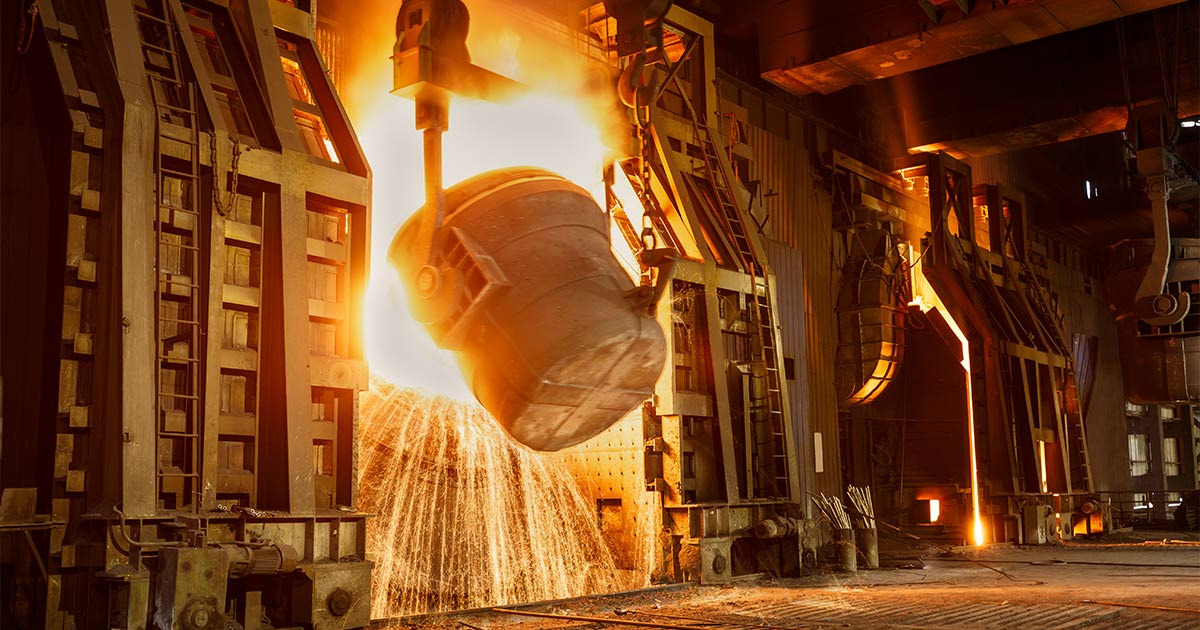
At its first Cabinet meeting on April 8, 2026, Mongolia's 35th Prime Minister, N. Uchral, decided to announce an international open tender for the construction of a major steel complex.
According to 2025 data, Mongolia imported and consumed around 1 million tons of steel annually, valued at approximately $911 million. This figure is projected to rise to 1.7 million tons by 2030. In response, the government has decided to establish a plant with the capacity to meet 60-70% of domestic demand. A total of 650 hectares of land in Orkhon soum, Darkhan-Uul province, has already been designated as a state special-purpose area for the project.
Mongolia does not have any enterprises with experience in constructing and operating large-scale facilities for producing steel from iron ore.
As a result, the country also faces a shortage of specialized experts, engineers, and technical personnel in this field. Therefore, it would be difficult to implement the project using only domestic resources. The Government considers it appropriate to cooperate with experienced international players in the steel industry that have access to investment, technology, and markets.
The Government led by N. Uchral has sent invitations for the open tender for the steel complex to more than 30 international organizations. Proposals from potential strategic investors will be accepted until May 10. After that, the five companies with the most competitive proposals will be shortlisted within 14 days.
Regarding this, Minister of Industry and Mineral Resources G. Damdinnyam said that invitations and tender documents would be sent to leading steel-producing countries, major enterprises, and investors worldwide, inviting them to invest in and cooperate on the integrated steel complex project.
He noted that the selection process will be completed by May 27. According to the preliminary feasibility study, the total investment is estimated at $806 million, with initial projections suggesting that the investment could be recovered within eight years.
With the construction of the steel plant, the prices of key raw materials used in construction are expected to decrease significantly, import dependence will be reduced, and around 1,700 permanent jobs will be created. It is widely believed that countries seeking development must support their steel industry, and that nations producing steel are better positioned to develop their industrial base. In this regard, the Ministry of Industry and Mineral Resources has been consistently pursuing a policy of developing heavy industry.
After the steel project, the government plans to establish a gold refining plant. Minister G. Damdinnyam said that an international open tender will be launched soon and that preparations are underway to begin negotiations with investors.
During the government of G. Zandanshatar, an open tender for the construction of a copper smelting and processing plant was announced in December 2025, with invitations sent to 55 companies from more than 20 countries. As a result, 13 companies from seven countries expressed interest.
Following the preliminary selection process, three companies from China and one company from Switzerland have been shortlisted.
The project is expected to require an investment of approximately $800 million to build a copper smelting plant with an annual capacity of 120,000 tons of refined copper. The selection process is now in its final stage, and the contractor is expected to be announced soon.
Following its victory in the 2024 parliamentary elections and securing a mandate to govern for the 2024-2028 term, the ruling Mongolian People's Party (MPP) has formed a government that has already seen its third prime minister in less than two years.
Although the MPP-led government has experienced frequent changes in leadership, it is notable that it has not introduced major policy shifts in its action programs across successive administrations, instead maintaining continuity in state policy.
In particular, the policy of developing heavy industry, initiated under the government of L. Oyun-Erdene, was continued under G. Zandanshatar and is expected to be further carried forward under Prime Minister N. Uchral, who was elected on March 30, 2026.
In order to establish a legal framework for the development of heavy industry, the Law on Industrial and Technological Parks, passed during Prime Minister L. Oyun-Erdene's tenure, came into force in August 2022. Preparatory work for the selection process to establish a copper processing plant is being regulated under this law and other relevant legislation.
In addition, with the aim of further improving the legal framework, the Ministry of Industry and Mineral Resources has initiated work on drafting a Law on Heavy Industry.
Regarding this, the State Secretary of the Ministry of Industry and Mineral Resources, B. Dashpurev, stated that Mongolia has so far lacked clear legal regulations to support the development of heavy industry and to create a favorable investment environment. Regarding this, the State Secretary of the Ministry of Industry and Mineral Resources, B. Dashpurev, stated that Mongolia has so far lacked clear legal regulations to support the development of heavy industry and create a favorable investment environment.
He noted that although the Law on Industrial and Technological Parks includes provisions supporting investment-such as exemptions from land fees, VAT, and import duties for producers-there remains a lack of specific tax policy support and clear legal regulation for establishing standalone industrial plants.
He also pointed out that some provisions related to the implementation of large-scale (mega) projects do not fully align with real-world conditions, which has led to criticism and the initiation of a draft Law on Heavy Industry.
At present, the concept paper for the law is still under development. The draft will address existing legal ambiguities and regulatory gaps not covered by other legislation.
Policy work will also be carried out to ensure coherence among other investment-related laws required for industrial development and to consolidate regulations that are currently fragmented and inconsistent.
During the drafting stage, consultations and discussions will be held to gather input from sectoral researchers, experts, and other stakeholders, with the aim of incorporating more detailed and refined regulatory provisions into the law. In order to ensure broad participation, discussions will be organized on a wide scale. The draft is planned to be submitted to the 2026 autumn session of the State Great Khural (Parliament).