Эрдсийг эрдэнэст
Ирээдүйг өндөр хөгжилд
Ирээдүйг өндөр хөгжилд
Mining The Resources
Minding the future
Minding the future
Within the framework of the government's long-and medium-term programs, a number of major initiatives have been launched under the "Gold-3" campaign. These efforts aim to increase gold production, rapidly boost foreign currency reserves, bring major gold deposits into production to support the accumulation of the National Wealth Fund, and improve the sector's legal and regulatory environment.
This time, a decision has been made to move forward with the long-discussed gold refinery project under the framework of the Law on Public-Private Partnerships, without placing a burden on the state budget. Preparations have now been completed for the announcement of an open international tender.
MMJ's O.Dulguun spoke with B. Dashpurev, State Secretary of the Ministry of Industry and Mineral Resources, about the project's progress and the current challenges facing the gold sector.
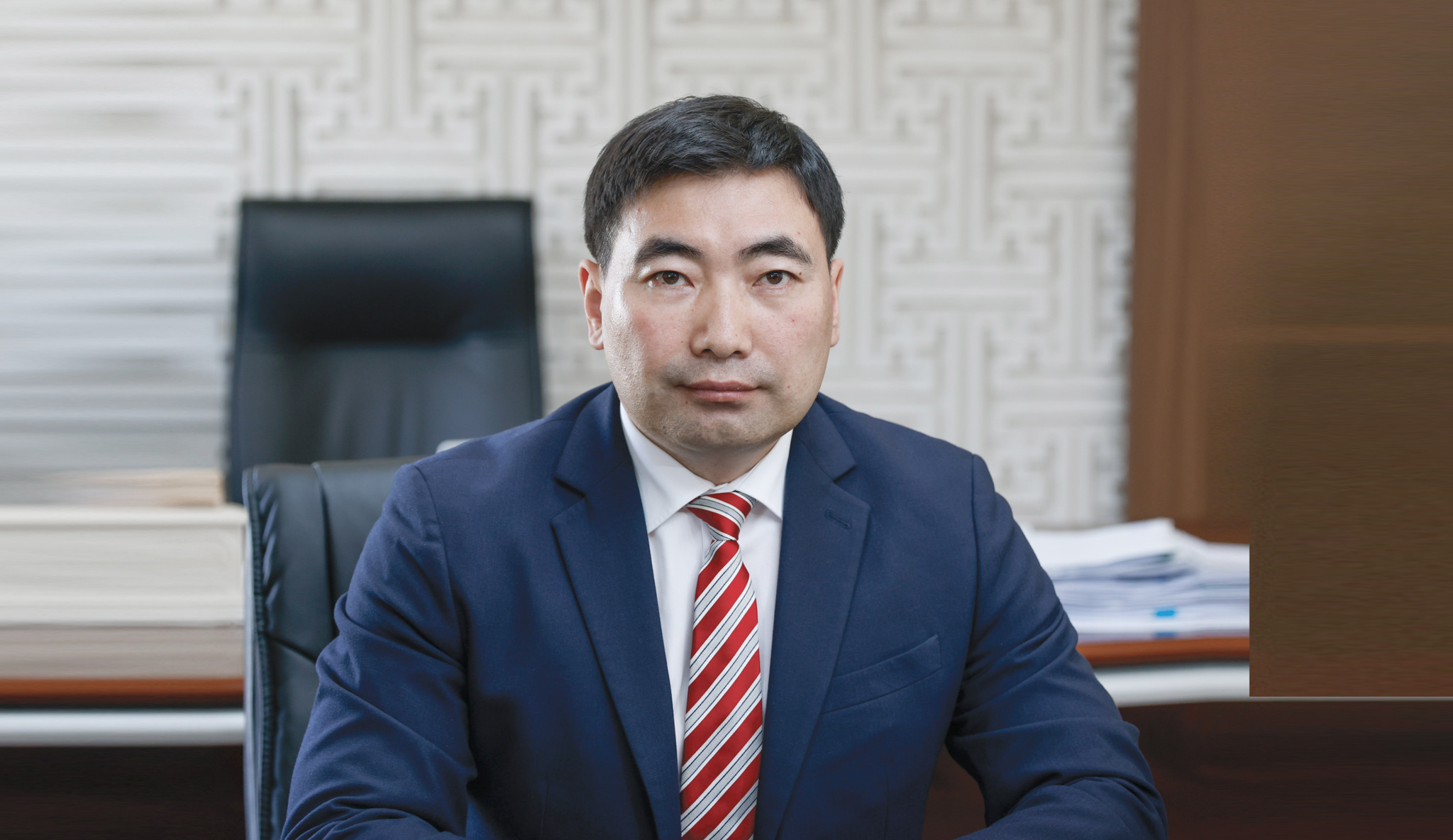
- It has been some time since the Government of Mongolia launched the "Gold-3" campaign as part of its efforts to ensure economic stability. Under this initiative, it was projected that, in the medium term, a total of 129.4 tonnes of reserves from 45 primary gold deposits would be brought into production, with gold deliveries expected to increase by 10 tonnes annually. Could you elaborate further on the activities being implemented under the "Gold-3" campaign?
Mongolia produced 16.5 tonnes of gold last year and is aiming to increase this figure to 20 tonnes this year. As of now, 3.6 tonnes have been delivered, representing a 33.3% increase compared to the same period last year.
Under the government's "Gold-3" program, several strategic measures are being implemented to ensure effective execution.
First, mining companies' operational plans are being reviewed and approved within a short timeframe, with support provided to enable them to commence activities without delay.
In addition, during the implementation of the so-called "Long Name Law," discrepancies in data have emerged between the Ministry of Environment and Climate Change and the cadastral system of the Mineral Resources and Petroleum Authority. For example, certain deposits have had their operations restricted due to registration errors, even though they do not in fact overlap with protected forest areas or water basins. Efforts are therefore underway to verify these cases and bring such deposits into production.
When utilizing mineral deposits, a requirement has been introduced to fully pre-deposit environmental rehabilitation costs and provide guarantees.
To curb illegal mining and the illicit cross-border trade of precious metals, particular attention is being paid to strengthening the provisions of the Criminal Code and improving inspection and enforcement mechanisms.
- Is it possible for gold deliveries to reach 20 tonnes this year? As of the first three months, gold deliveries stand at only 3.2 tonnes.
We estimate that there is full potential to achieve the set target. Mongolia has experience of delivering 21-24 tonnes of gold per year under previous programs. Although reserves have somewhat declined due to intensified alluvial (placer) mining, the implementation of the "Gold-2" and "Gold-3" national programs is revitalizing operations at primary gold deposits.
In addition, rising global precious metal prices are having a positive impact on the sector. Deposits that were previously considered uneconomical due to low ore grades are now being brought into production in line with higher prices, and special attention is being paid to increasing output.
Therefore, the relatively low first-quarter figure is due to seasonal factors, and production is expected to stabilize and reach the planned level going forward.
- Due to the ongoing global geopolitical situation, the gold market has become increasingly volatile; however, prices have continued to rise steadily. As a result, the strategic importance of the government's major gold refinery project is becoming even more significant. Is this long-discussed project currently at the feasibility study stage, and how is the detailed design work progressing? Could you provide an update on the project's implementation status?
The gold refinery project was previously at the stage of signing a memorandum of understanding with Kazakhstan for joint implementation.
At that time, the feasibility study estimated the cost of the facility at around $30 million; however, subsequent assessments later revised the figure to over $70 million.
In addition, citing relatively low production volumes and insufficient economic returns, the Mineral Resources Professional Council previously returned the project for further improvement.
However, under current conditions, we believe there is a compelling need to implement the project, as technological advancement has accelerated and costs have become relatively more affordable.
According to our plan, the refinery will have the capacity to process 20 tonnes of gold and 30-50 tonnes of silver per year per production shift. In line with international practice, the facility will be designed to operate on a two- or three-shift basis, ensuring sufficient capacity to accommodate future increases in production without overloading the plant.
The project's key technological advantage is its ability to recover not only gold and silver, but also rare metals such as platinum and palladium. In particular, discussions are underway to introduce technology for extracting these valuable metals through the secondary processing of metallurgical slag generated as a by-product of copper separation from "Erdenet Mining Corporation" and "Oyu Tolgoi."
Ultimately, we will refine our natural gold to 999 purity, enabling it to be traded with internationally recognized certification. This will also lay the foundation for producing higher value-added final products such as jewelry and commemorative coins.
In the current context of geopolitical risks and transport restrictions, the ability to refine metals domestically to international standards will play a significant role in strengthening Mongolia's economic independence.
- When will the international open tender for selecting the contractor to supply the technology and construct the facility be announced? What are the main criteria being applied in the tender evaluation process?
This project is a strategically important objective included in the Government of Mongolia's action program, and the working group established by order of the Prime Minister is led by the Minister of Industry and Mineral Resources, G. Damdinnyam. I am heading the sub-working group responsible for ensuring practical implementation.
We recently visited Germany and the United Kingdom, where we were able to directly observe advanced technologies and production processes that meet international standards.
At present, the working group has completed all necessary studies, consolidated the relevant proposals, and fully prepared the tender terms of reference. We are planning to officially announce the open competitive selection process at the beginning of next month.
The tender evaluation will be based on the following key criteria.
First, among the three globally recognized core technological solutions, the most modern option with the lowest environmental impact will be selected.
Second, preference will be given to solutions that enable the rapid installation and commissioning of the plant, while keeping processing costs at the lowest possible level. Third, the contractor will be required to ensure that gold refined in Mongolia can be directly traded on international markets, including the capacity to obtain internationally recognized certification within a short timeframe.
Our core policy is to introduce the best available technology, ensure the plant becomes fully operational and operates efficiently within a short timeframe, and ultimately hand it over to the state.
- What is the total estimated cost of the project? In addition to state budget investment, are options such as foreign direct investment or implementation through a concession agreement being considered?
Our guiding principle is that no funding will be provided from the state budget for this project. The variation in investment amounts depends on the technological solutions proposed by each company, as well as the timeframe for cost recovery and the eventual transfer of the plant to the state.
At present, proposals have been received from technology suppliers in Germany and the United Kingdom, offering potential investments in the range of $23-45 million. The variation in investment amounts depends on the technological solutions proposed by each company, as well as the timeframe for cost recovery and the eventual transfer of the plant to the state.
Therefore, it has been deemed appropriate to implement the project under the Law on Public-Private Partnership. The company selected through the tender will finance and construct the refinery at its own expense and recover its investment through processing fees.
Preliminary estimates suggest that the investment could be recovered and the project could become profitable within a minimum of seven years. The final decision will depend directly on the tariffs proposed by the bidders and their technological capabilities.
- Has the plant site been fully cleared? How have infrastructure requirements - such as power supply, water resources, and the availability of skilled labor-been addressed? Is there a risk that delays in land clearance could affect the project timeline?
There are no anticipated difficulties or risks related to the project site or land clearance. The 4-hectare plot designated for the plant has been fully cleared and is ready for development. The refinery is designed to be highly compact and technologically efficient and will therefore not require extensive infrastructure such as railway connections.
Modern advanced technological solutions are typically based on automated systems and require only a small number of skilled personnel to operate. Therefore, no constraints are anticipated in relation to energy supply, water usage, or other engineering infrastructure that could delay or hinder the project.
This compact and intelligent solution is expected to be a key factor in enabling the plant to be commissioned within a short timeframe and to ensure stable operations.
- In order for precious metals produced by the gold refinery to be fully accepted on international markets, it is essential for the facility to obtain accreditation from the London Bullion Market Association (LBMA). Will the refinery planned for our country be able to meet this high standard?
To obtain LBMA accreditation, several key requirements must be met, including uninterrupted production over a five-year period, with operations remaining stable and fully compliant for at least the final three years. In addition, both the technology employed and the refining standards must fully meet international benchmarks.
According to our projections, the first five years of the seven-year operational period will effectively serve as a preparatory phase for obtaining international accreditation. In other words, once the refinery becomes operational, it will supply products that meet the required standards consistently over five years to fulfill certification criteria, after which it will operate under full international certification for the remaining two years.
The companies participating in the tender are also committing to obtain the relevant international certification within the seven-year timeframe. This commitment is a key condition for ensuring the efficient operation of the project and its eventual transfer to the state. In doing so, it will lay the foundation for Mongolia to establish its own gold refinery with "Good Delivery status on the international market.
- It is stated that the refinery will be capable of separating and refining not only gold, but also associated precious metals. By how much would this increase the project's overall economic returns? From a technical standpoint, do you consider the project fully prepared for this capability?
The extraction and refining of precious metals such as platinum and palladium carry relatively less direct economic weight compared to gold and silver production. However, there are two key advantages.
First, it reflects highly efficient resource utilization, as both primary and by-product metals are fully recovered from the raw mineral material. Second, since these are high-value precious metals, they will also generate additional revenue for the economy.
In addition, these metals are strategic raw materials essential for the development of advanced downstream industries. We are not focusing solely on immediate economic returns, but are also taking into account their direct and indirect positive impacts on future technological and industrial development.
From a technical perspective, the modern technologies being considered are fully capable of separating these metals, which will further enhance the project's overall competitiveness.
- Once a domestic refinery becomes operational, by how much will costs associated with overseas refining be reduced? How is the project's overall economic benefit estimated?
Today, in order to refine gold abroad, we incur a range of costs, including transportation, insurance, storage in accredited facilities in the destination country, and refining service fees. All of these represent foreign currency outflows.
With the commissioning of a domestic refinery. it will become realistically possible to reduce these direct and indirect costs by up to seven times compared to current levels. This represents not only substantial cost savings, but also a strategic step toward retaining foreign exchange reserves within the country and enhancing overall economic efficiency.
We assess the project's benefits not solely in terms of refining costs, but also in relation to foreign exchange management, improved security, and the establishment of a foundation for producing higher value-added final products.
- What are the practical justifications and advantages of implementing this project not solely by the state, but in partnership with the private sector?
Our main rationale is to bring a strategically important facility into operation within a short timeframe, without placing any burden on the state budget.
If implemented under the Investment Law, the investor would fully own and operate the facility and benefit from incentives such as tax stabilization agreements. However, gold is a strategically important commodity for Mongolia. Its refining, export to international markets, holding as part of foreign exchange reserves, and further use in value-added products such as bullion coins and tourism-related products all require appropriate state oversight and regulation.
Therefore, under current conditions, implementing the project within the framework of the Public-Private Partnership Law best aligns with our objectives. Under this model, the private sector would finance and establish the facility, assume responsibility for its operation and management, and transfer the plant to state ownership once its investment has been recovered.
On one hand, this approach enables the introduction of modern technology without requiring state funding. On the other hand, it ensures that a strategically important facility is ultimately retained under state ownership, making it the most effective solution.
In short, we are pursuing a policy that leverages private sector investment and execution capacity to safeguard the country's strategic interests.
- Are you training specialized engineers and technical staff domestically for the plant, or will experts be brought in from abroad? How many new jobs will be created in total?
Under the project, the main contractors will not only construct the refinery but will also be responsible for ensuring stable operations by providing highly skilled specialists from the technology-owning countries throughout the operational period. Alongside the long-term deployment of expatriate experts, Mongolian engineers and technical staff will work closely with them to gain hands-on experience and fully master the technology.
All costs related to on-site training, theoretical and practical instruction, and knowledge and technology transfer for Mongolian specialists have been fully included in the project budget. This is intended to ensure that, by the time the facility is transferred to the state, national personnel will have acquired the full capability to independently operate this advanced technology.
As for employment, the refinery will be highly automated and therefore will not require a large workforce. Preliminary estimates suggest that no more than around 20 people will be needed per shift.
Although the number of jobs may appear limited, all of these positions will be highly specialized, skilled, and high-productivity roles.
- Has a clear timeline been set for the commissioning of the plant? What challenges are currently being encountered in the implementation of the project?
We are planning to bring the plant into full operation in 2027. At present, there have been relatively few obstacles in the implementation process. However, from a systemic perspective, there is one issue that we consider necessary to address.
The issue relates to the process of reviewing and approving feasibility studies (FS) for large-scale, technology-intensive projects. In previous years, attempting to attract private sector investment on the basis of overly general, state-funded feasibility studies that did not reflect operational realities has proved to be a mistake.
This is because feasibility studies approved by the state have, in some cases, not been fully compatible with the technologies and operational approaches of potential investors. As a result, there are frequent cases of wasted time and financial resources.
Therefore, moving forward, there is a need to shift toward a more flexible and practical system in which feasibility studies prepared by investors and technology suppliers themselves are reviewed by the Mineral Resources Professional Council under the Ministry of Industry and Mineral Resources and, where necessary, improved prior to approval.
This approach will serve as a key driver for the real acceleration of project implementation and for strengthening investor confidence.
Thank you for your time!