Эрдсийг эрдэнэст
Ирээдүйг өндөр хөгжилд
Ирээдүйг өндөр хөгжилд
Mining The Resources
Minding the future
Minding the future
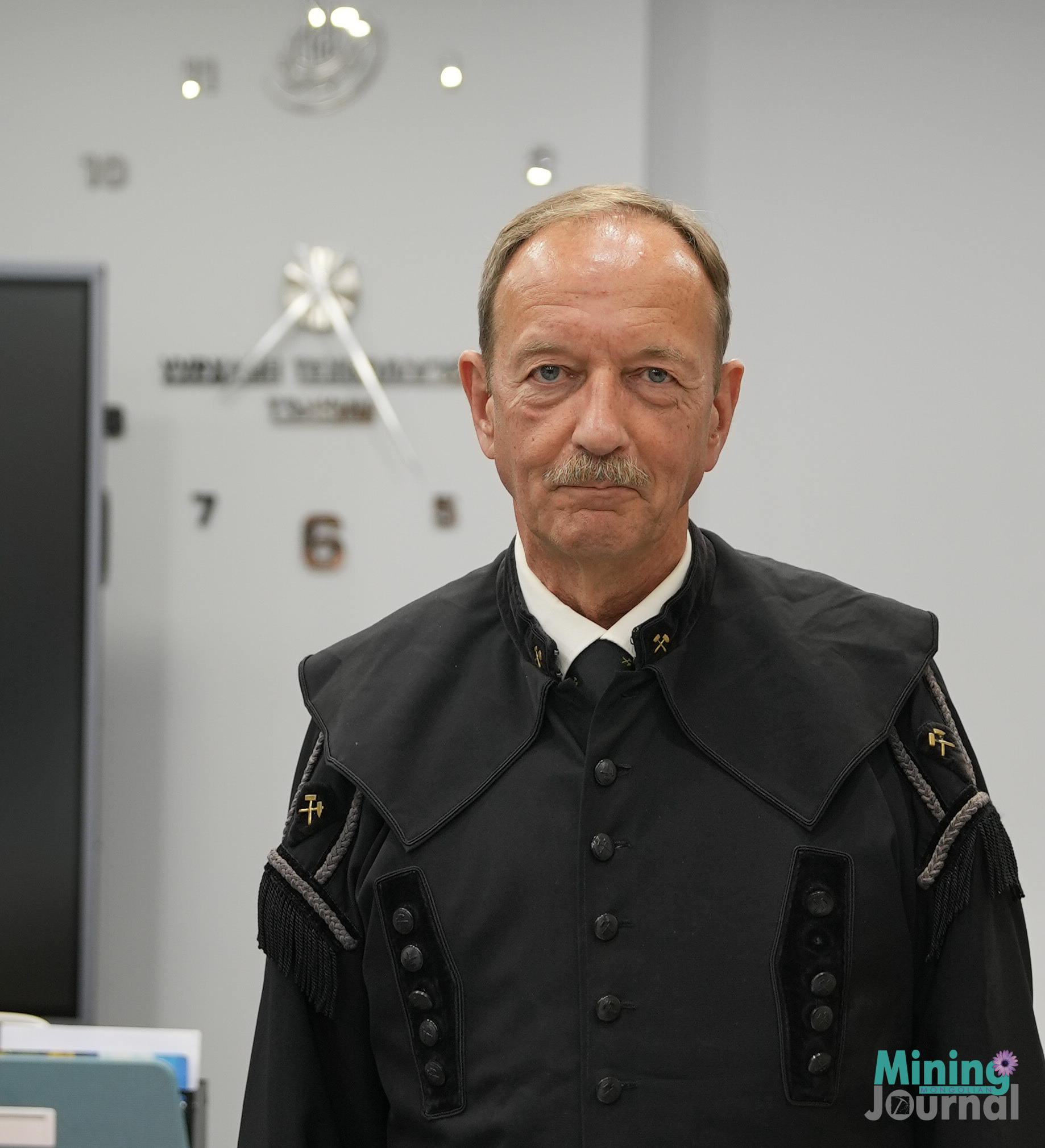
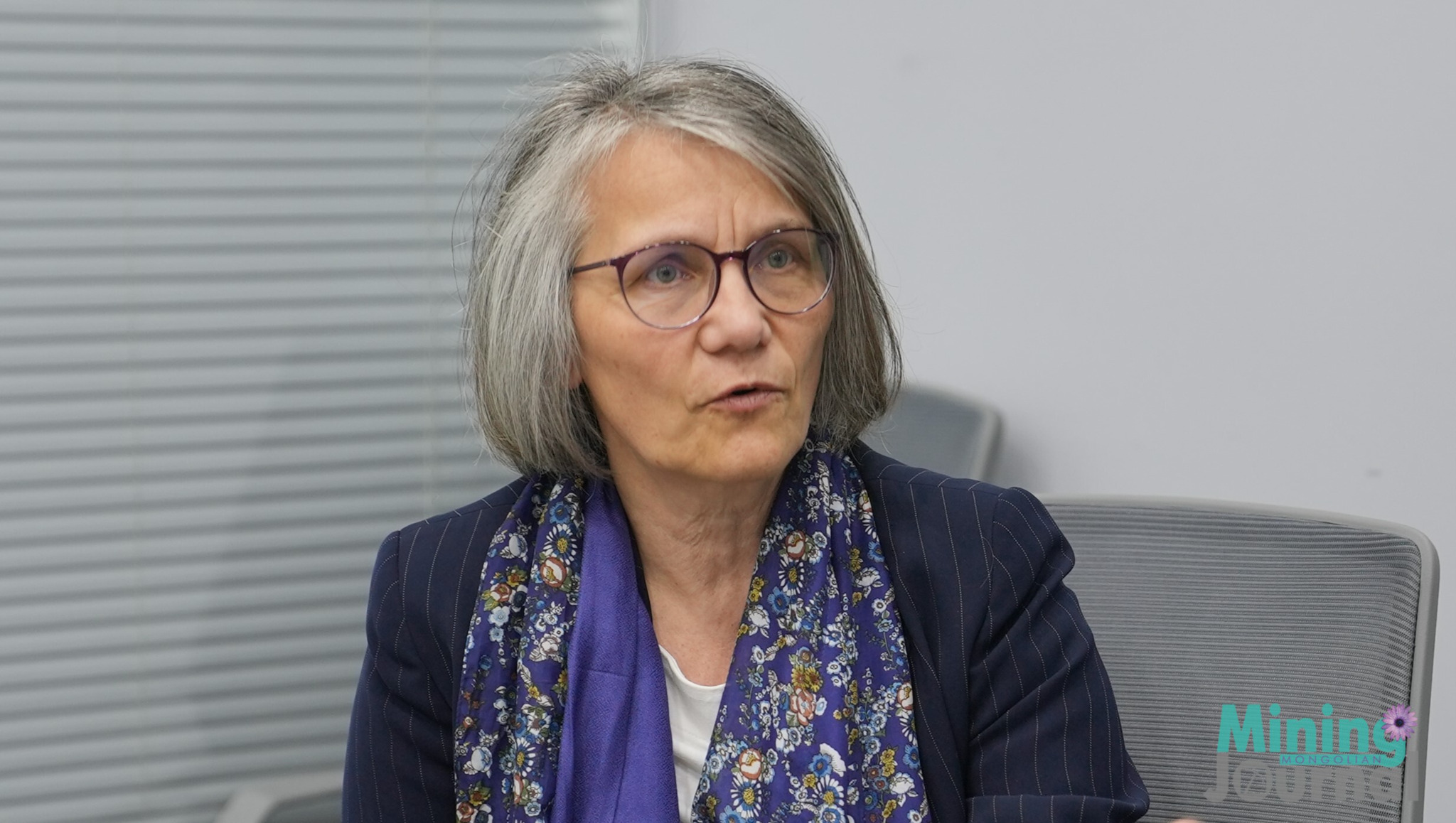
The Mongolian Mining Journal spoke with Professor Carsten Drebenstedt, Professor of Surface Mining, and Katja Polanski, Head of the Language Department at the Technical University Bergakademie Freiberg in Germany.
What is the main objective of your visit to Mongolia this time?
Professor Carsten Drebenstedt: My visit to Mongolia this time is focused primarily on education and academic cooperation. During my stay, I will meet with colleagues from the Mongolian University of Science and Technology (MUST), the German-Mongolian Institute for Resources and Technology (GMIT), as well as representatives of mining associations and mining organizations to discuss the further development of our cooperation.
In addition, I am evaluating students participating in the joint 3+3 program, which is jointly implemented by MUST and TU Bergakademie Freiberg, together with Katja Polanski.
You have been working with Mongolia for around 27 years. How has the country’s educational and professional capacity developed during this time?
Carsten Drebenstedt: The development has been remarkable. I have seen very strong progress in the conditions for education, research, and academic training at MUST. In 2014, I was involved with the first cohort at GMIT. That was one of the key milestones following the Mongolian government’s decision to introduce new approaches to education based on European standards.
Alongside the development of the mining industry, mining education has also advanced significantly. For example, the mining department at MUST now has access to modern software for geomechanical calculations and mine planning.
I am very pleased to have MUST as a partner because we also benefit from Mongolia’s practical experience in metal mining, particularly since Germany no longer has active metal mining operations. This year, the second conference on minerals and mining will be held at MUST in October, and we will share our research and findings to support international academic exchange.
MUST and the Freiberg University are implementing a joint 3+3 program. What outcomes do you expect from this program?
Carsten Drebenstedt: The program was established about 15 years ago, and the cooperation agreement was officially signed in 2011 following a visit to Freiberg by the head of the department. The main objective of the program is to provide Mongolian students with three years of study in a specially adapted mining engineering curriculum, while also preparing them linguistically and professionally to continue their education at our university in Freiberg.
Katja Polanski: MUST offers students German language training during the first two years of their studies. In this period, students build the linguistic foundation needed to enter the program. It requires considerable time and effort. They then continue with additional German language courses in Freiberg before fully integrating into the academic program.
Carsten Drebenstedt: So far, around 60 students have graduated from the program, and we hope that number will continue to grow. Last year, seven students went to Freiberg, and this year we have approximately 14 potential candidates.
I believe this is a highly valuable opportunity for Mongolian students. In the agreement we renewed two years ago, we also introduced a double-degree option. This means that students who complete their diploma studies in Germany automatically receive a Master of Science degree from MUST as well.
In your opinion, how successful are students in learning German and continuing their studies?
Katja Polanski: It takes time. Learning German is not easy, but students who make a genuine effort can succeed. Many in the program have invested the necessary time and completed their studies.
The better prepared students are, the more successful they become. Some also take additional language courses during their studies, even if these are not formally required. Overall, success depends strongly on student motivation, and those from schools with extended German-language training often have an advantage.
Alumni also play an important role. Some graduates now teach in mining technology programs in German, helping students at MUST not only with technical knowledge but also with language and terminology. This is very important.
Another alumnus from a former German-Mongolian scholarship program now works at the Oberberg Mining Survey Authority in Freiberg and is likely to return to Mongolia with further experience.
This shows that cooperation continues beyond the university level through long-term exchange of knowledge and experience. In addition, there are various joint programs on sustainable mining involving Mongolia and other partner countries.
What should Mongolian students focus on to succeed in the international mining and geology sectors, especially in cooperation with German institutions?
Carsten Drebenstedt: Mining engineering is a highly interdisciplinary field. It is a demanding profession, and students should use their time at university to acquire as much knowledge and practical experience as possible. The primary responsibility of a mining engineer is to match the appropriate equipment and technologies to specific geological conditions. Therefore, understanding practical challenges is extremely important, and I strongly encourage students to visit mine sites as often as possible.
For those pursuing a master’s degree, scientific curiosity is equally essential. Students should not only apply existing knowledge, but also generate new knowledge and develop their own solutions and innovations, whether in digital technologies, automation, or robotics.
As a mining engineer, I have continued learning throughout my entire career. Every day, every site visit, and every professional interaction provides new knowledge and experience.
Another important aspect is leadership - the ability to motivate personnel at production sites to contribute to continuous improvement processes.
Safety is one of the highest priorities in mining. In every mine planning and management process, safety must come first. This also extends to environmental responsibility, including consideration for surrounding communities and biodiversity.
Even professors in Germany must continuously update their professional knowledge. We actively participate in projects aimed at expanding knowledge and developing new methods and applications, and students benefit greatly when they are involved in such projects.
Every student has different strengths. Some prefer operational work at mine sites, while others are more interested in planning and office-based work. Some pursue research careers, while others work in mineral economics or in equipment manufacturing and maintenance companies. There are many fields in which mining engineers can contribute. Through practical training and experience, students should identify the role that best matches their abilities and interests.
Mongolia aims to develop a sustainable and technologically advanced mining sector. How can academic partnerships between Mongolia and Germany contribute to this goal?
Carsten Drebenstedt: We follow two main approaches. The first is supporting the development of GMIT, and the second is strengthening cooperation with MUST through joint programs and academic partnerships. GMIT graduates are familiar with Germany through studies and academic exchange. Programs such as the 3+3 initiative also help students develop German language skills. This allows German companies operating in Mongolia to recruit highly qualified engineers who meet European standards and can communicate in German. In this way, they become strong ambassadors for German products and technologies.
In international cooperation, foreign language skills are extremely important. Mongolia works closely with many countries, and students study Korean, Japanese, Chinese, Russian, and other languages. German should also be part of this multilingual environment.
Germany has long been, and will likely remain, an important partner for Mongolia. As one of the world’s leading industrial producers, Germany can contribute technologies and equipment across all stages of mining, including excavators, trucks, crushers, mills, electrical and control systems, as well as consulting services. In return, Mongolia can support Germany through access to strategic minerals.
This year marks several important milestones: 100 years since Mongolia first sent students to Germany, and 15 years since the launch of the 3+3 program.
Academic exchange between the two countries remains very active. Mongolia’s Minister of Education is expected to travel to Germany next week and visit Freiberg. There have also been important initiatives, including education cooperation meetings between Mongolia and the German state of Saxony, as well as the “1000 Engineers Program.”
There are many opportunities for Mongolian students. Global interest in mining and mineral resources has increased again after a period of decline, creating broad opportunities for cooperation between Mongolia and Germany - not only through the 3+3 program, but also through English-language Master’s programs and future research collaboration.
Research is equally important. As mentioned earlier, we support MUST in organizing the second scientific conference, as university staff must remain at the forefront of knowledge and innovation. Universities should not only teach existing knowledge but also contribute to the creation of new knowledge and industrial development.
Another key responsibility of universities is communication with society. They need to clearly explain their work and contributions - what mining is, how responsible mining is implemented, and how it supports sustainable development.
Mining should not be seen with fear, but rather as a sector with the potential to drive regional development and create opportunities. Strengthening this dialogue with society and stakeholders is therefore essential and should be actively supported by universities.
Thank you for your time!